National Museum Cardiff holds natural history and other collections as well as art. Its paintings take in Welsh artists and British painting more widely, along with a notable group of French Impressionist and Post-Impressionist pictures formed partly through the collecting of the Davies sisters.
This selection draws mostly on the Welsh and British pictures, and the strongest thread running through it is place. Thomas Jones looks towards the Carneddau from near his family home at Pencerrig. Turner works inside Ewenny Priory. Penry Williams, who appears three times, moves between a waterfall in the Vale of Neath and the bay at Pozzuoli. Place shades into work in pictures of a board school classroom, women carrying loads and a procession crossing the sands to Swansea market. The older European paintings are mostly religious, from El Greco's Saint Peter to Claude's Saint Philip. The French group is small, with three pictures by Meissonier, Manet and Renoir, and it is not a survey of the museum's Impressionists and Post-Impressionists.
The twenty works were chosen from the museum's documented holdings, independently of the museum. Dates and attributions keep the qualifications given in the linked records.
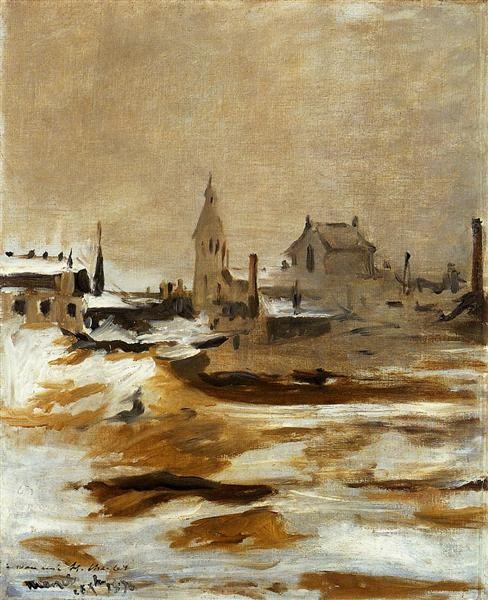
The snow at Petit-Montrouge has not settled into a clean sheet. It lies in uneven patches on the roofs and the street, and warmer surfaces and other traces of the city show through between them. With no dramatic figure or incident to follow, your attention goes to Manet's whites, which shift by small steps of tone from one patch to the next. The buildings still give the view its urban scale, though the weather makes them harder to read.
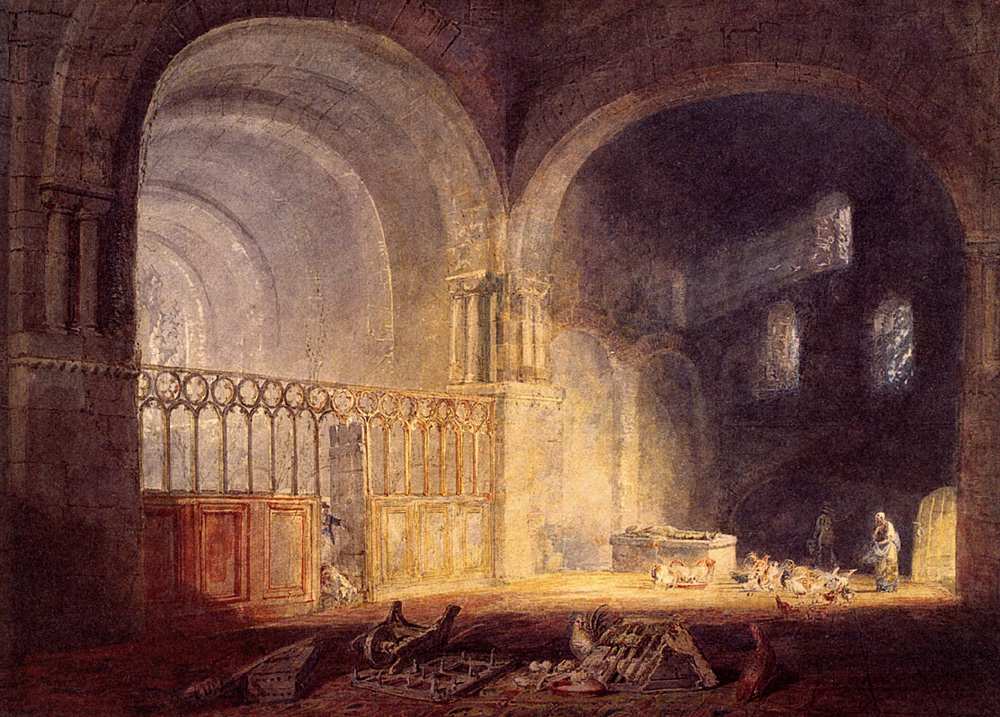
Turner shows the transept only as far as the light allows. It catches parts of the screen and a stretch of floor, while the upper walls and the recesses sink into shadow. As a record of the building, it leaves a good deal out.
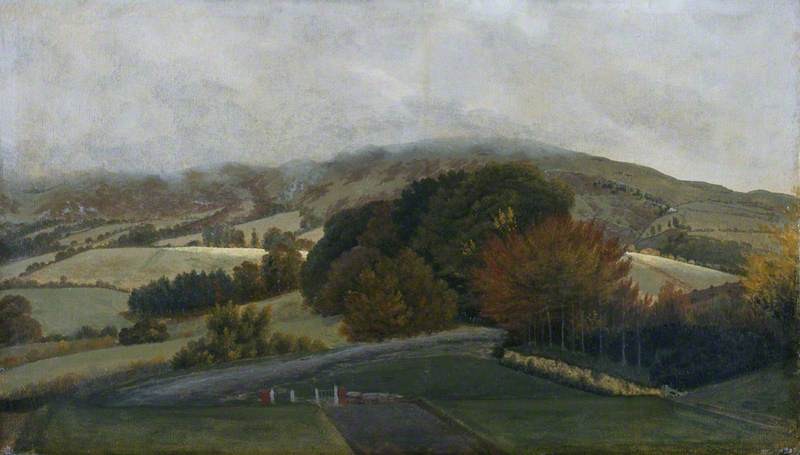
The museum identifies this as country near Jones's family home at Pencerrig. The nearer slopes are plainly in use, crossed by tracks and divided by field boundaries. Further off, the land recedes in orderly stages to the distant peaks of the Carneddau. It is hard to say whether that order comes from the terrain or from the way Jones arranged it. Probably it is a little of each.
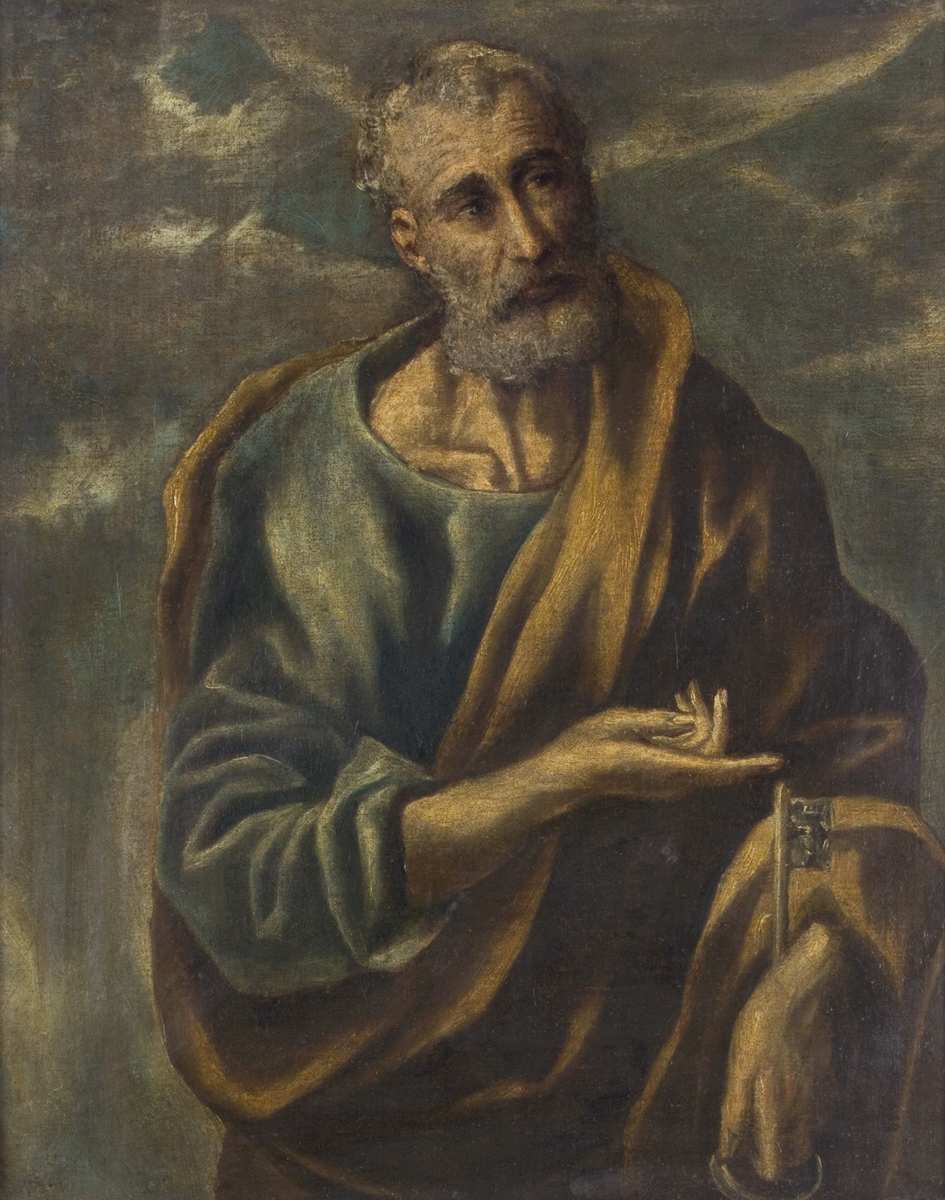
Peter's raised hand, held close against his chest, competes with his pale face for attention, and nearly wins. Blue drapery and elongated forms carry the eye between the two and on through the figure, which turns and lifts with an upward tension. Beyond cloud and shadow there is almost no setting, so everything rests on the body and that one gesture.
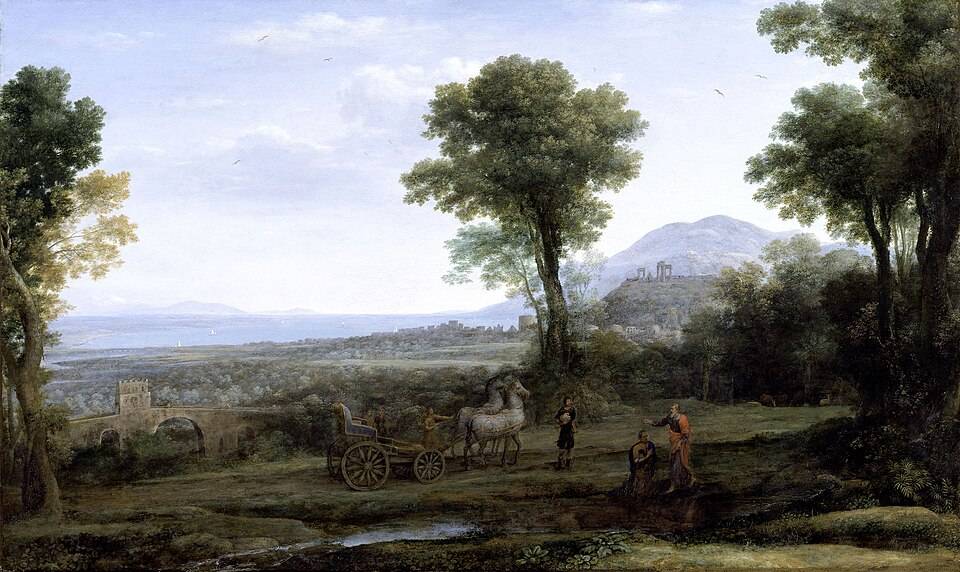
The baptism takes some finding. It happens in a small group beside the carriage, sheltered by tall trees, and beyond them the land opens into a long distance. The title does begin with the landscape, after all. Claude seems to treat the biblical episode as one incident in the travellers' longer journey, and he gives most of the picture to the journey.
Hagar holds up the exhausted Ishmael, and their distress is close at hand and physical. The angel, though, gestures away from them, and Sacchi uses hands and glances to tie the pair's plight to another part of the landscape. The canvas itself is shaped, and the three figures curve together to fit it.
Millais paints an embrace rather than the sacrifice named in the title, and it is the affection that makes it terrible. A young woman holds her father, who sits armed. In the biblical story Jephthah has made a vow, and her greeting will lead to her death. Other figures surround the pair and react to them, so the embrace is never seen on its own.
A woman looks towards a window, and Waterhouse leaves out whatever she sees there. The room gets far more description: a patterned textile, a tiled floor and other decoration. That imbalance may simply be because this is a study. She seems to be waiting, but the picture does not say for what or for whom.
This is one painter's portrait of another, and an unpretentious one. Mengs brings Wilson close, his face turned, in a soft cap and warm clothing that stand out against a greenish ground. There is no studio around him. The palette and brushes at hand are enough to say what he does.
For a picture named after a journey to market, this gives the travellers remarkably little room. Pritchard gives most of it to water, boats and a broad sky, and the people and cattle bound for Swansea are small figures crossing a large tidal landscape.
The children share the benches of a board school classroom, but not their attention. Some read, some wait and some look elsewhere, and books, turned faces and the placing of hands show which is which. Marks paints distinct pupils rather than one idealised type, and the classroom is more convincing for it.
Griffith Owen's harp very nearly upstages him. Its curved frame rises above and around him and fills a large part of the picture. The instrument does more than tell us his profession. It decides how he sits, held within its curves with one hand near the strings.
Three women walk away from a workplace together, and the weight of their loads shows in the way they move. Osborn keeps them distinct through small details: each has her own apron and her own way of covering her head.
The girl sits low in the grass, stiller and more distinct than the loose, broken marks of the field around her. Clausen does not cut her out of it, though. He paints figure and setting in related ways, and the same outdoor light falls on both.
Havell comes at Cilgerran Castle from the river, past wooded banks and boats in the shadowed foreground. From this low route, the castle's height can be judged against the ground around it.
Williams changes his handling as the view recedes. On the nearer slope he picks out animals and rough ground one by one, giving them a distinct texture, while the broad bay beyond is laid in with larger areas. In this view of Pozzuoli, buildings along the far shore mark a settlement but leave the water open.
After the open bay at Pozzuoli, this view closes in. The pale fall of water stands out sharply against dark rock and vegetation. The ravine is narrow and the cliff encloses it, so the water has little room to spread sideways and the drop is what counts.
Of Penry Williams's pictures here, this is the one built around a crowd. The Mass is held out on the land the reapers work, in the middle of their working day, and the chapel is modest beside the people resting around it. Bright clothing and open fields give the gathering warmth and an informal air.
The title gives the game away before the picture does. Hats, hands and faces press close together as the players watch their cards and one another. No single large gesture betrays the deception. It shows only in how unevenly their attention is spread, and Meissonier leaves posture and glance to do the telling.
La Parisienne names a type rather than a person, and much of the painting's care goes into what she wears. She stands in a blue dress and hat that give her a public presence, against a lightly indicated background. Small shifts of light separate the parts of the costume without breaking up its overall shape. Her gloved hands, held together near the waist, make the one contained gesture.
Explore this selection in Artline
See the selected works alongside books and events from their period, or compare when the artists lived. The books and events provide context, not evidence of direct influence. Works without confirmed dates remain in this guide.
Around the working day
Several of these pictures are about work, yet few show anyone in the middle of it. Pritchard's procession has not yet reached Swansea market. The bal maidens are on their way out of the workplace, and the reapers have stopped for Mass. Griffith Owen sits within the curve of his harp but is not playing it. Even in Marks's classroom only some of the children are reading. The people most obviously busy at their trade may be Meissonier's card sharpers.
Further reading
Anne Dayez, Michel Hoog and Charles S. Moffett · Read online or download · English
Anne Dayez, Michel Hoog and Charles S. Moffett wrote this exhibition catalogue on Impressionism, which you can read online or download. It gives background on the movement for Manet's snow scene and Renoir's La Parisienne, the only pictures in this selection that fall within its subject.
 Art, literature & history