 Art, literature & history
El Greco
1541–1614
Selected artwork
View of Toledo
ca. 1599–1600
The Metropolitan Museum of Art
Life & artwork timeline
1541–1614
9 artwork previews
Select a dot to preview a work. Dots show selected works and the current gallery page. Ranges begin at their recorded starting year.
View of Toledo
ca. 1599–1600
Other names (62)
Domenico Greco, Domenico Greco Teotocópuli, Domenicos Theotocopoulis, Domenicos Theotocopoulos, Domenicos Theotocopuli, Domenicos Theotokópoulos, Domenico Tehocopopuli, Domenico Teoscopoli, Domenico Teotocopulo, Domenico Teotopopuli, Domenico Theocopoli, Domenico Theocopuli, Domenico Theopoli, Domenico Theoscopoli, Domenico Theotocopolo, Domenico Theotocopopulos, Domenico Theotocopouli, Doménico Theotocopoulis, Doménico Theotocopoulos, Domenico Theotocopuli, Domenico Theotocopulo, Domenico Theotocopuly, Domenico Theotokopoli, Domenico Theotokopolis, Domenico Theotokopoulos, Domenico Theotokopuli, Domenico Theotorotoli, Domenico Theotoskopoli, Domenikos Theotocopoulis, Domenikos Theotocopoulos, Doménikos Theotocópuli, Domenikos Theotokopolous, Domenikos Theotokopoulos, Doménikos Zeotokopoulos, Domeniko Theotokopoulos, Domingo de Theotocopuli, Domingo Greco, Domingo Teotocópul, Domingo Theotocópuli, Dominico Greco, Dominico Greco Teotocopuli, Dominico, Griego Theotocópuli, Dominico Theotocopuli, Dominikos Greco, Dom Thoepotuli, El Dominico, El Griego, Greco Domenicos Theotocopuli, Grego scolare di Titiano, Il Greco, Le Grec, Menegos Theotokopoulos, Tehocopopuli, Teoscopoli, Teotocopuli, Theocopoli, Theopoli, Theotocopoli, Theotocopuli, Theotokopoli, Theotokopolis, Δομήνικος Θεοτοκόπουλος (Doménikos Theotokópoulos)
Biography
Domenikos Theotokopoulos, known as El Greco, was born in Crete and developed a career across the eastern Mediterranean, Italy and Spain. Byzantine art formed an important part of his artistic background. In Venice he encountered the painting of Titian, Tintoretto and the Bassano family; in Rome he studied works by Michelangelo and Raphael. By 1577 he had settled in Toledo, where religious commissions and portraits became central to his practice. His distinctive use of colour, gesture and elongated figures gave familiar subjects an intense visual character. The works selected here include a city view, a portrait and religious scenes, connecting his different kinds of painting.
Reference biography
Doménikos Theotokópoulos (Greek: Δομήνικος Θεοτοκόπουλος, pronounced [ðoˈminikos θeotoˈkopulos]; 1 October 1541 – 7 April 1614), most widely known as El Greco (Spanish pronunciation: [el ˈɣɾeko]; "The Greek"), was a Greek painter, sculptor and architect of the Spanish Renaissance, regarded as one of the greatest artists of all time. El Greco was a nickname, and the artist normally signed his paintings with his full birth name in Greek letters often adding the word Κρής (Krḗs), which means "Cretan" in Ancient Greek.
El Greco was born in the Kingdom of Candia (modern Crete), which was at that time part of the Republic of Venice, and the center of Post-Byzantine art. He trained and became a master within that tradition before traveling at age 26 to Venice, as other Greek artists had done. In 1570, he moved to Rome, where he opened a workshop and executed a series of works.
During his stay in Italy, El Greco enriched his style with elements of Mannerism and of the Venetian Renaissance taken from a number of great artists of the time, notably Tintoretto and Titian. In 1577, he moved to Toledo, Spain, where he lived and worked until his death. In Toledo, El Greco received several major commissions and produced his best-known paintings, such as View of Toledo and Opening of the Fifth Seal.
El Greco's dramatic and expressionistic style was met with puzzlement by his contemporaries but found appreciation by the 20th century. El Greco is regarded as a precursor of both Expressionism and Cubism, while his personality and works were a source of inspiration for poets and writers such as Rainer Maria Rilke and Nikos Kazantzakis. El Greco has been characterized by modern scholars as an artist so individual that he belongs to no conventional school. He is best known for tortuously elongated figures and often fantastic or phantasmagorical pigmentation, marrying Byzantine traditions with those of Western painting.
Although mostly ignored by his contemporaries, El Greco is considered one of the greatest painters in the history of art. Art critics have resolutely placed him among the best artists of all time, citing his originality, his power of expression, and his innovative use of form and colour. His works are seen as transcending and surpassing the artistic traditions from which they emerged and as having had a profound effect on generations of later artists, including Francisco Goya, Diego Velázquez, Eugène Delacroix, Édouard Manet, Salvador Dalí and Pablo Picasso, amongst many others.
Text sources
Artistic connections
Explore the people and evidence around El Greco.
Teachers & influences
3You are exploring
El Greco
1541–1614Influence & legacy
3 of 17Artworks by year
Loading chronology…Museum / collectionAll collections
Finding recorded artworks…
Exhibition records
View exhibitions →Museums & collections
Documented holdings of works attributed to El Greco. Check the museum’s record for current display information.
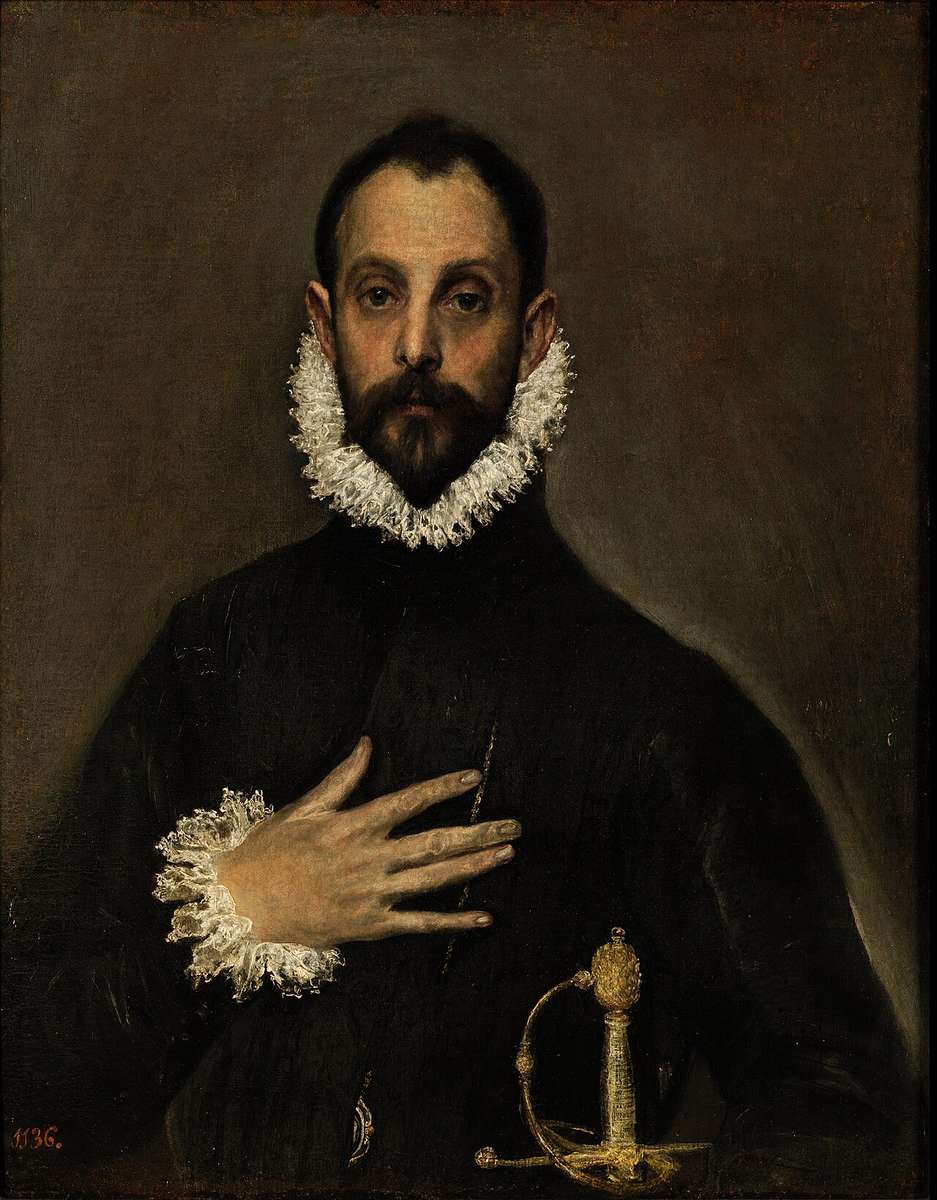 Museo Nacional del Prado38 recorded worksThe Nobleman with his Hand on his Chest
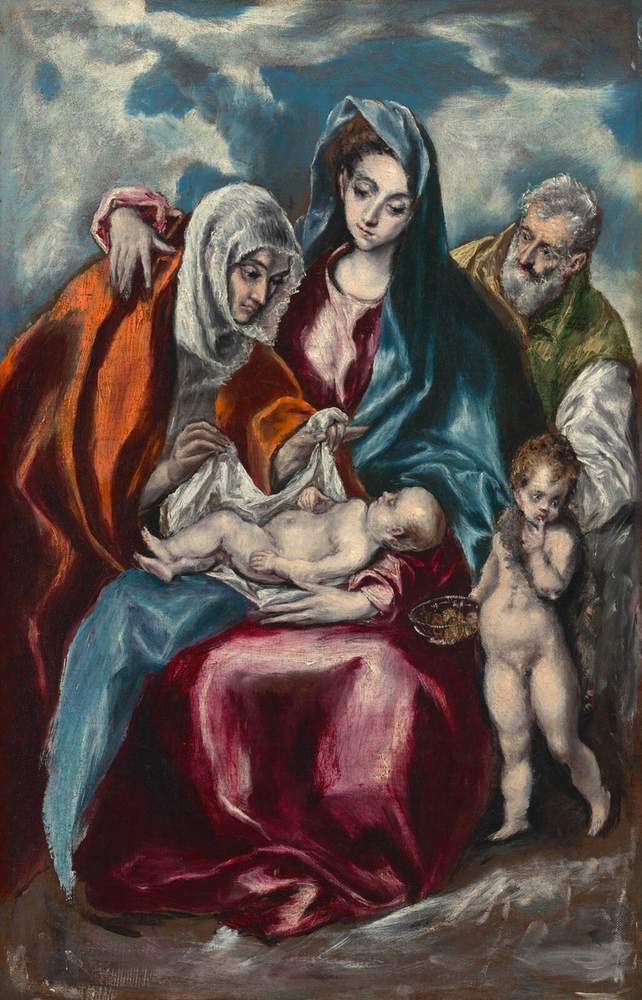 National Gallery of Art9 recorded worksThe Holy Family with Saint Anne and the Infant John the Baptist
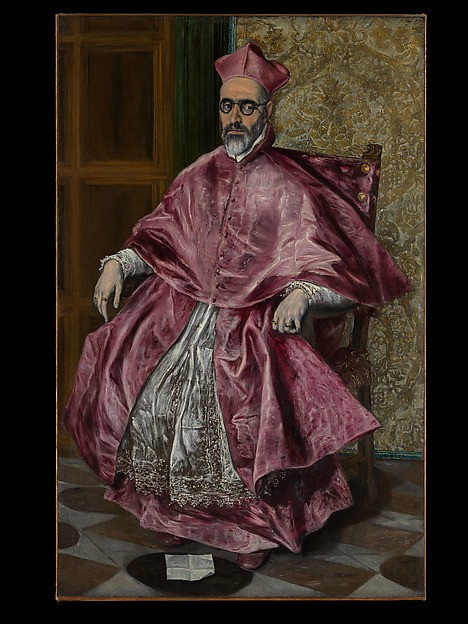 The Metropolitan Museum of Art9 recorded worksCardinal Fernando Niño de Guevara (1541–1609)
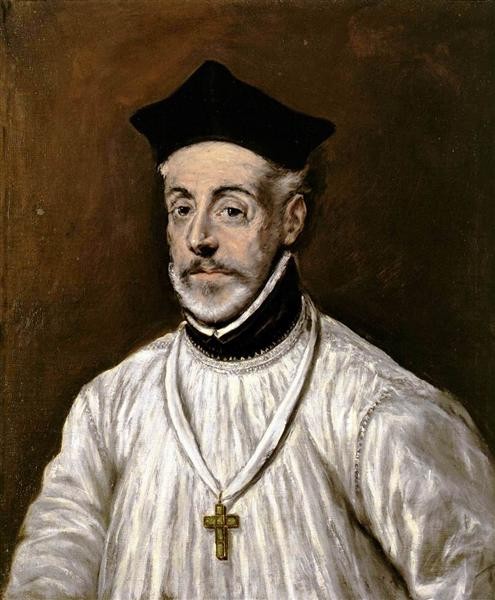 Museo del Greco8 recorded worksPortrait of Diego de Covarrubias
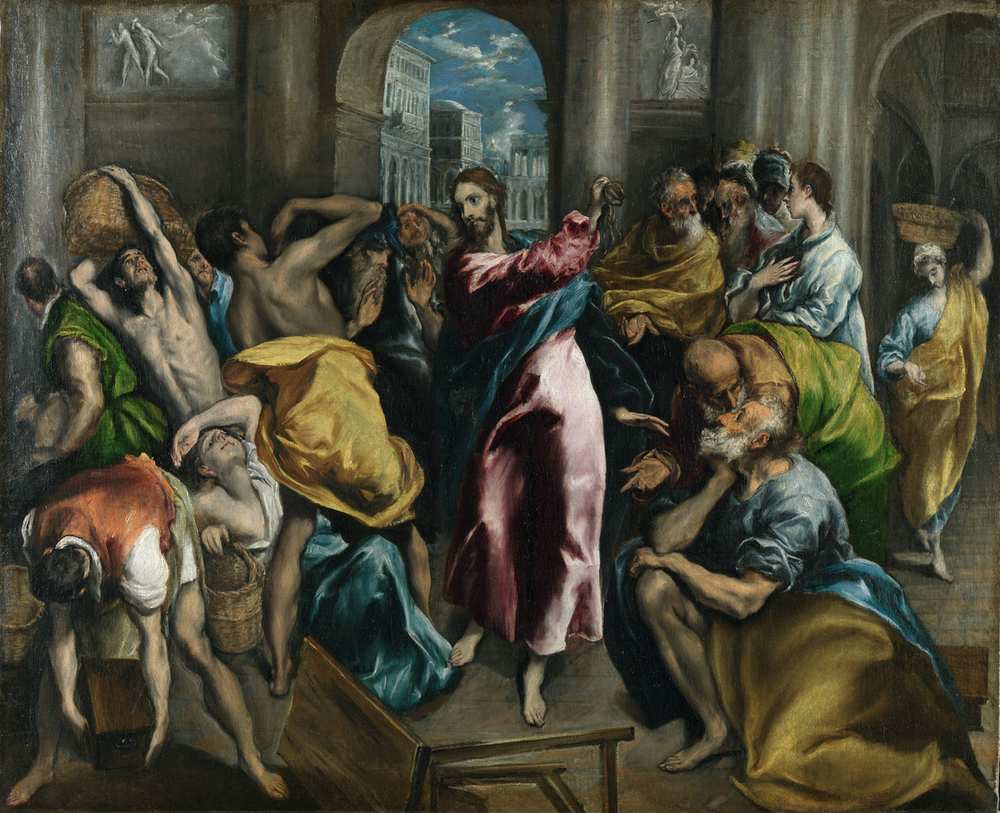 National Gallery4 recorded worksChrist driving the Traders from the Temple
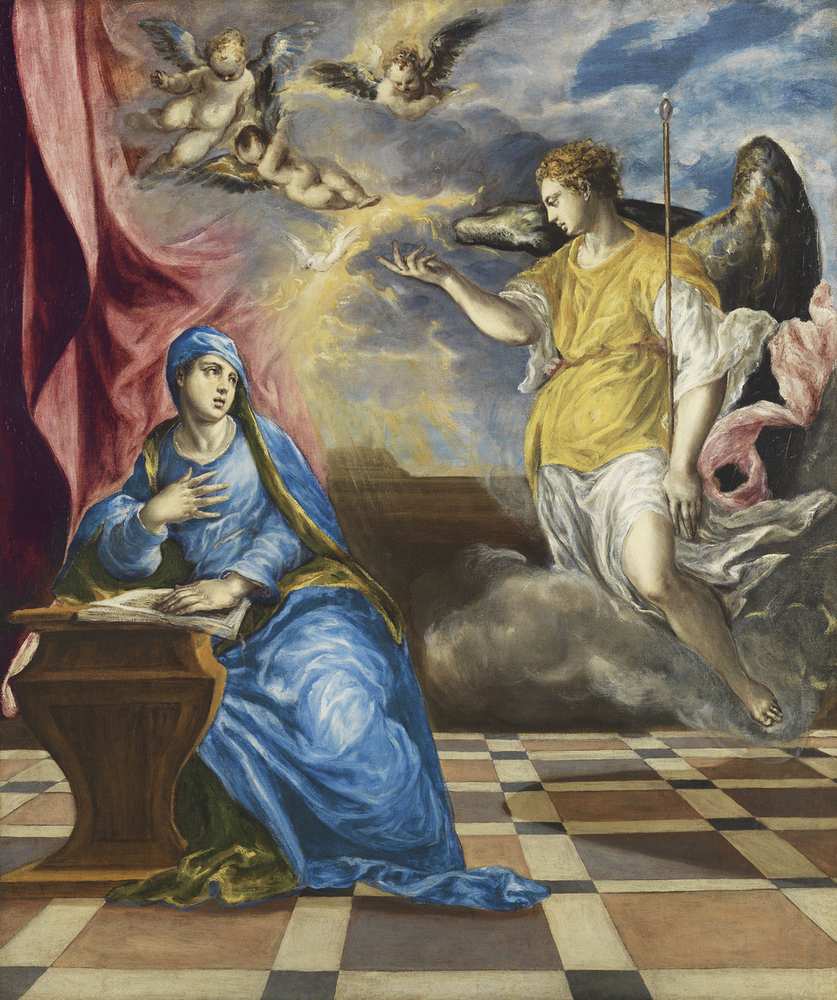 Museo Nacional Thyssen-Bornemisza3 recorded worksThe Annunciation
Sources 15
- Wikidata (CC0)
- Spanish painters: selected museum and authority research
- National Gallery, London
- National Gallery, London
- Country research — museum-connected artworks and verified painter affiliations
- National Gallery, London
- Pantheon 2025 — Datawheel (CC BY-SA 4.0)
- National Gallery, London
- SMK: exact creator authority reconciliation
- NGA: verified existing artist authorities
- US museum and gallery creator authorities
- Pantheon 2025 — Datawheel (CC BY-SA 4.0)
- Expanded artwork research — official museum evidence
- National Gallery, London
- Pantheon 2025 — Datawheel (CC BY-SA 4.0)
In Gombrich’s The Story of Art
- The Opening of the Fifth Seal · c. 1608–1614
- Fray Hortensio Félix Paravicino · 1609