The Courtauld Gallery, at Somerset House in central London, has a relatively small collection. It is particularly well known for its Impressionist and Post-Impressionist paintings, among them works by Manet, Cézanne and Van Gogh.
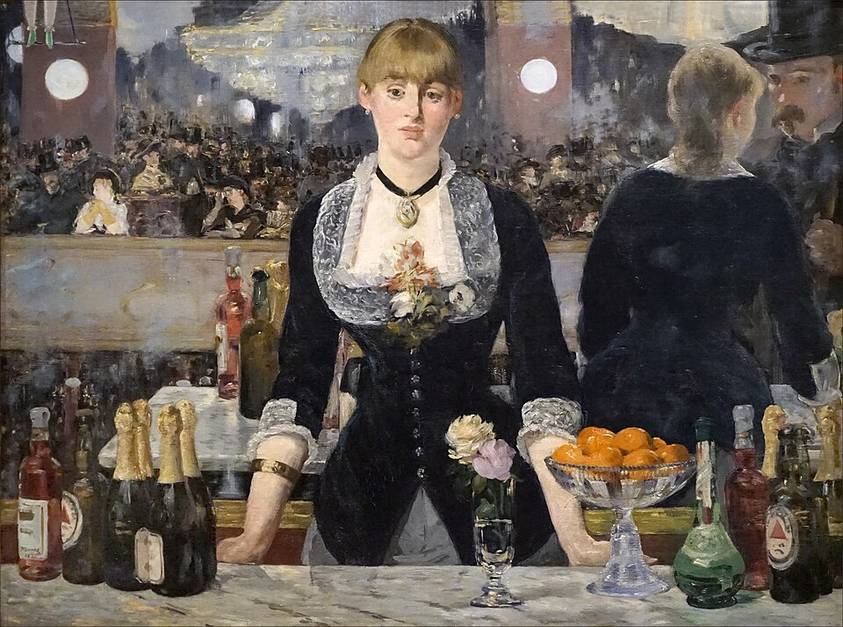
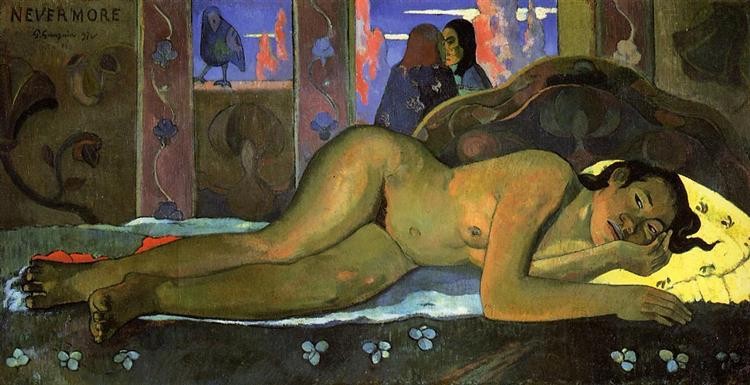
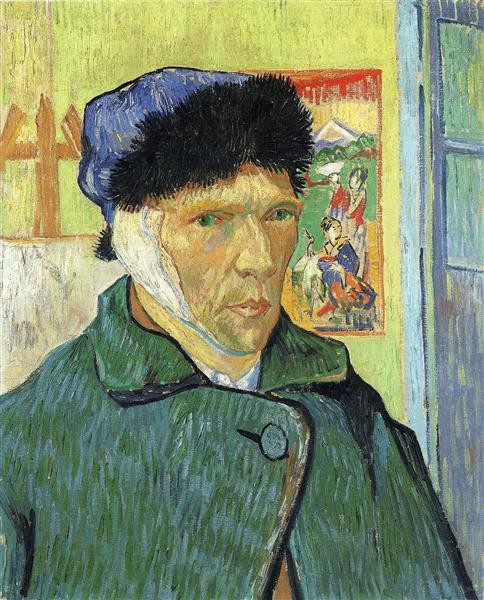
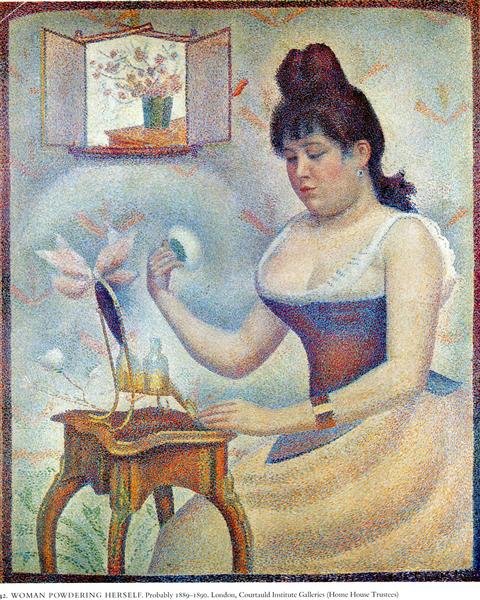
This selection of twenty includes Manet's A Bar at the Folies-Bergère, Van Gogh's Self-Portrait with Bandaged Ear, Gauguin's Nevermore and two works by Seurat. Much of it goes further back, though: a portrait by Rogier van der Weyden, Bruegel's Landscape with the Flight into Egypt, three works by Rubens, a chalk drawing by Michelangelo and a group of Italian devotional pictures. Delacroix's watercolour of a mandarin drake and a harbour scene by Dufy also find a place.
Several works answer one another, sometimes across centuries. Claude and Heemskerck both make convincing pictures that are not records of what they show: one an imaginary view, the other a reconstruction of a lost ancient monument. Rubens's three paintings handle crowds and colour in sharply different ways. Manet and Gauguin each put a puzzle at the heart of a picture and leave it unsolved.
Artline chose these works from documented Courtauld holdings, independently of the museum. Dates and attributions keep the qualifications given in the collection records.
1882 · Canvas; paint medium not specified · The Courtauld Gallery
The mirror is the trouble. It hangs behind the barmaid, who stands at her counter with bottles and fruit set out in front of her, and it shows the Folies-Bergère crowded with fashionable visitors. But the reflection is not arranged the way a straightforward mirror would show it. Manet painted this near the end of his life, and he built one of his most puzzling compositions into what might have been an ordinary scene of Parisian entertainment. The inconsistency is plainly there; how to read it is another matter.
Gauguin painted the word 'Nevermore' into the picture itself, and an inscription like that might seem to promise a key. It is just one more sign, and it explains none of the others. A reclining woman turns her head towards a room where other figures and a bird appear. The picture never settles what the bird and the figures mean to her, who is watching whom, or what is being said. Nor is this a documentary record of Tahitian life. These things have been arranged, and even the mood is uncertain: ominous, melancholy or something else.
The bandage is conspicuous, and the title makes sure nobody misses it. But it is only part of what the portrait shows. Coat, cap, the studio around him and the print on the wall behind are all set down in firm outlines and distinct, separate brushstrokes.
The raised arm has a homely explanation: she is sitting at her dressing table with a powder puff lifted towards her face. Seurat makes more of the gesture than that, though. Rounded forms echo one another across the picture: the curve of her hair, the lifted arm, the swell of her bodice, the edge of the table. And his separate touches of colour go over flesh, fabric and furniture alike, with no change of technique for skin.
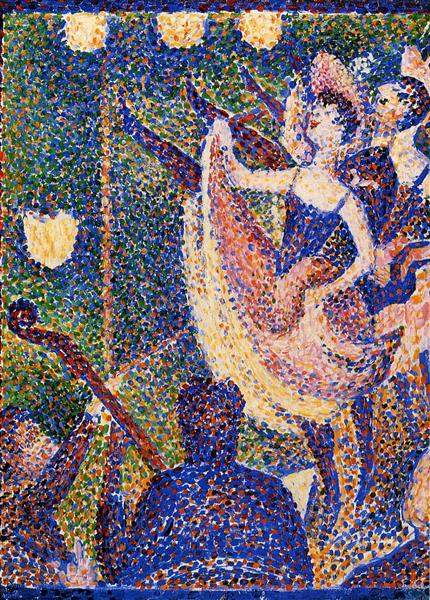
Seurat's other work here comes from the same years but moves from the dressing table to the stage. A dancer's leg kicks upward, and a curved form beside it repeats the rising line. As a study, it picks out these rhythms and does not try to show the whole performance, so the dancer becomes one part of a larger pattern.
The title puts the landscape first, and so does the picture. Bruegel's travellers, the Holy Family, are small figures beside the river, mountains and settlements that fill the panel, and at first the scene can look like nothing more than a wide view. You have to find their route within it. Once you spot them, the land changes: what seemed neutral scenery becomes ground that a vulnerable group has to make its way through.
The central nude, drawn in chalk, has a weight and solidity that the smaller scenes around him lack. A winged figure comes down from above, and masks and other symbolic images press in on the body. Michelangelo seems to set different kinds of reality side by side: solid flesh at the centre, surrounded by masks and visions that suggest theatrical roles or, as the title implies, dreams.
Light breaks into the crowded scene, and the riders and horses stop moving together. Bodies fall, directions clash, limbs tangle. Rubens shows the conversion as a sudden loss of control that overtakes the whole group, not just Paul.
Where the Conversion of Saint Paul lets a crowd come apart, this picture holds one together. Mary kneels among clouds, angels and movement, yet she is easy to find: large areas of red, blue and pale colour set the main figures apart from the activity around them. The composition leads the eye upwards, and Rubens gives some figures more weight than others, so the bustle never swamps the coronation at the centre.
David bends over the fallen giant and raises his arm to get leverage for the blow. He is the smaller of the two, but at this point in the story he controls the fight, and the two bodies cross each other in the moment before he strikes. Rubens keeps to a narrow range of browns, a world away from the reds and blues of the Coronation, though the two pictures are dated to about the same time.
The title is honest: this is an imaginary view, not a record of the actual place. Bridge, hill, water and shaded foreground are laid out in linked stages, and light opens up the distance. Each part is plausible and the whole is coherent and entirely believable, but Claude made it up.
Little here explains who the sitter was. Apart from his likeness and his clothes, the picture offers few possessions as clues, and the clothes take up a good deal of room: a fur-trimmed garment spreads across much of the picture and surrounds the face, which is painted more firmly. A pale architectural opening makes a contrasting edge, and his hand gives the lower part of the picture a point of focus.
The gridiron, which refers to Saint Lawrence's martyrdom, appears here as a way of recognising him, not as a scene of suffering. He stands upright beneath hovering angels, identified by it and by a palm. Girolamo shows none of the violence.
Sebastian dominates the rocky landscape. His bare body is larger and more prominent than the other saints, and his raised arm continues its twisting outline. Jerome, Anthony Abbot and Christopher share the setting but take part in no single event with him. They are gathered together for devotion, and the differences in size show their relative importance.
c. 1825 · Watercolour on paper · The Courtauld Gallery
Plain paper, a bird in profile, feathers folded close: Delacroix's careful study gives the mandarin drake no setting at all. Watercolour picks out the breast, wing and tail in distinct touches. With so many differently marked feathers, the bird could easily have dissolved into decorative pattern. It never does, and holds together as one body.
Hulls crowd the harbour as shapes of red, green and blue, with masts rising above them, and their reflections scatter more patches of colour across the water. You can still tell they are boats. But Dufy gives their arrangement on the painted surface a force that goes well beyond describing a harbour.
The giant stands astride a harbour, and the ships and tiny people beneath its legs give a sense of the enormous size Heemskerck imagined for the ancient statue. Detailed architecture makes the reconstruction convincing. It is a reconstruction all the same, not an eyewitness record of the lost monument, and however confident the drawing, it is no evidence of how the statue actually looked or stood. Claude's title admits that his Tivoli is imaginary; this one makes no such admission.
Psyche leans forward and raises a light to see the face of the sleeping Cupid. The picture turns on that one-sided look. Her outstretched arm and bent posture are all searching, while he lies unguarded, unaware of her and unable to look back.
Benvenuto Tisi, known as Garofalo, hangs a parted curtain above a tightly packed group. The adults lean inward, and the children are set at different heights in the cramped space. Zoppo's saints share a landscape without sharing an event, but these figures are linked by touch and overlapping shapes, and none of them faces outward on its own. The curtain frames that closeness.
Rogier gives his sitter an occupation instead of a gesture. The open book makes a pale area around the man's hands at the front of the picture, while his dark headwear and the dark background draw attention to his face. Reading needs no dramatic movement, and Rogier has arranged the fingers, pages and features with great care. The man in the portrait attributed to Forabosco has few clues beyond his face and his clothes; this one at least has a book.
Explore this selection in Artline
See the selected works alongside books and events from their period, or compare when the artists lived. The books and events provide context, not evidence of direct influence. Works without confirmed dates remain in this guide.
Records and order
Full details of each work are in the collection records. The order of works in this guide is our own and does not follow a confirmed hanging.
Further reading
Anne Dayez, Michel Hoog and Charles S. Moffett · Read online or download · English
The catalogue of an Impressionism centenary exhibition, placing Manet, Seurat and the painters around them within the debates of nineteenth-century art. Its plates invite comparisons between scenes of public entertainment and private interiors, and between the kinds of mark used to paint them. That makes it a good companion to the Folies-Bergère and the Seurats here. It does not cover the older works in the selection.
 Art, literature & history