 Art, literature & history
Vincent van Gogh
1853–1890
Selected artwork
Terrace of a Café at Night (Place du Forum)
c. 16 September 1888
Kröller-Müller Museum
Life & artwork timeline
1853–1890
2 artwork previews
Select a dot to preview a work. Dots show selected works and the current gallery page.
Terrace of a Café at Night (Place du Forum)
c. 16 September 1888
Biography
Vincent van Gogh was a Dutch painter whose career developed through work in the Netherlands, Belgium and France. In Antwerp he studied art and encountered Japanese prints; after moving to Paris in 1886, contact with artists including Gauguin and Seurat helped transform his use of colour. He settled in Arles in 1888 and later worked in Saint-Rémy. His paintings use strong colour and visible brushwork to give familiar subjects an expressive intensity. Artline's selection includes a bedroom, a self-portrait, trees, a wheat field and flowers. Together these works offer several ways to look at his treatment of interiors, landscape and still life.
Reference biography
Vincent Willem van Gogh (Dutch: [ˈvɪnsɛnt ˈʋɪləɱ vɑŋ ˈɣɔx] ; 30 March 1853 – 29 July 1890) was a Dutch Post-Impressionist painter who is among the most famous and influential figures in the history of Western art. In just over a decade he created about 2,100 artworks, including around 860 oil paintings, most of them in the last two years of his life. They include landscapes, still lifes, portraits and self-portraits, and are characterised by bold colours and dramatic, impulsive and expressive brushwork that contributed to the foundations of modern art. His suicide at age 37 followed years of mental illness and poverty.
Born into an upper-middle-class family in Zundert, Van Gogh drew as a child and was serious, quiet and thoughtful. As a young man he worked as an art dealer, often travelling, but became depressed after he was transferred to London. He turned to religion, and spent time as a Protestant missionary in southern Belgium. He drifted in ill health and solitude before taking up painting in 1881, having moved back home with his parents.
His younger brother Theo supported him financially, and the two kept up a long correspondence by letter. His early works, mostly still lifes and depictions of peasant labourers, contain few signs of the vivid colour that distinguished his later work. In 1886, he moved to Paris, where he met members of the avant-garde, including Émile Bernard and Paul Gauguin, who were reacting against the Impressionist sensibility.
As his work developed he created a new approach to still lifes and local landscapes. His paintings grew brighter in colour as he developed a style that became fully realised during his stay in Arles in the south of France in 1888. During this period he broadened his subject matter to include series of olive trees, wheat fields and sunflowers.
Van Gogh suffered from psychotic episodes and delusions and though he worried about his mental stability, he often neglected his physical health, did not eat properly and drank heavily. His friendship with Gauguin ended after a confrontation with a razor, when in a rage, he severed part of his own left ear. He spent time in psychiatric hospitals, including a period at Saint-Rémy. After he discharged himself and moved to the Auberge Ravoux in Auvers-sur-Oise near Paris, he came under the care of the homoeopathic doctor Paul Gachet. His depression continued and on 27 July 1890, Van Gogh shot himself in the chest with a revolver. He died from his injuries two days later.
Van Gogh was unsuccessful during his lifetime and was considered a madman and a failure. He became famous after his suicide, and exists in the public imagination as the quintessential misunderstood genius, the artist "where discourses on madness and creativity converge". His reputation began to grow in the early 20th century as elements of his painting style came to be incorporated by the Fauves and German Expressionists. He attained widespread critical, commercial and popular success over the ensuing decades, and is remembered as an important but tragic painter, whose troubled personality typifies the romantic ideal of the tortured artist.
Text sources
Artistic connections
Explore the people and evidence around Vincent van Gogh.
Teachers & influences
3 of 17You are exploring
Vincent van Gogh
1853–1890Influence & legacy
3 of 31Artworks by year
Loading chronology…Museum / collectionAll collections
Finding recorded artworks…
Exhibition records
View exhibitions →Museums & collections
Documented holdings of works attributed to Vincent van Gogh. Check the museum’s record for current display information.
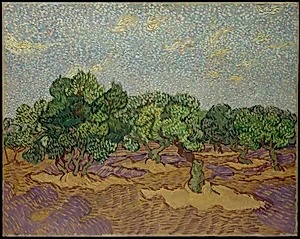 The Metropolitan Museum of Art29 recorded worksOlive Trees
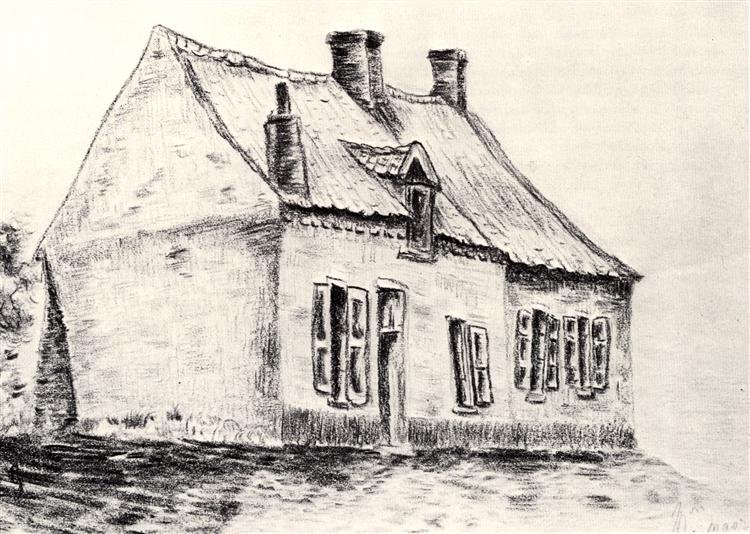 National Gallery of Art22 recorded worksA house Magros
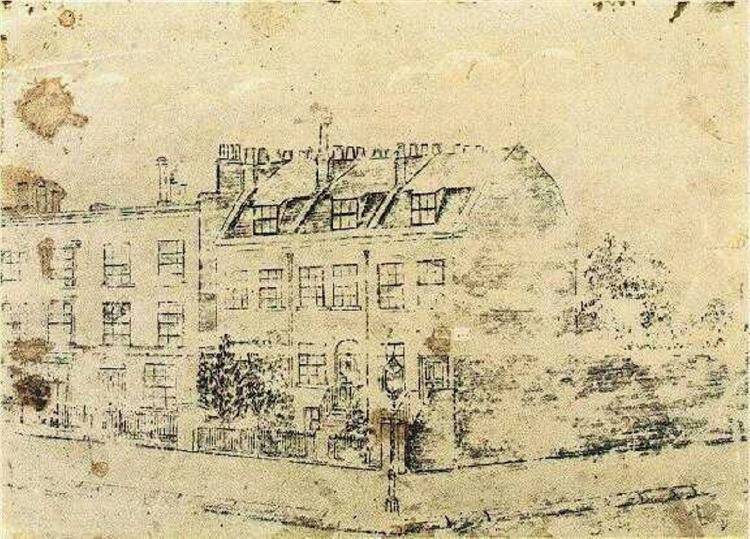 Van Gogh Museum21 recorded worksVincent's Boarding House in Hackford Road, Brixton, London
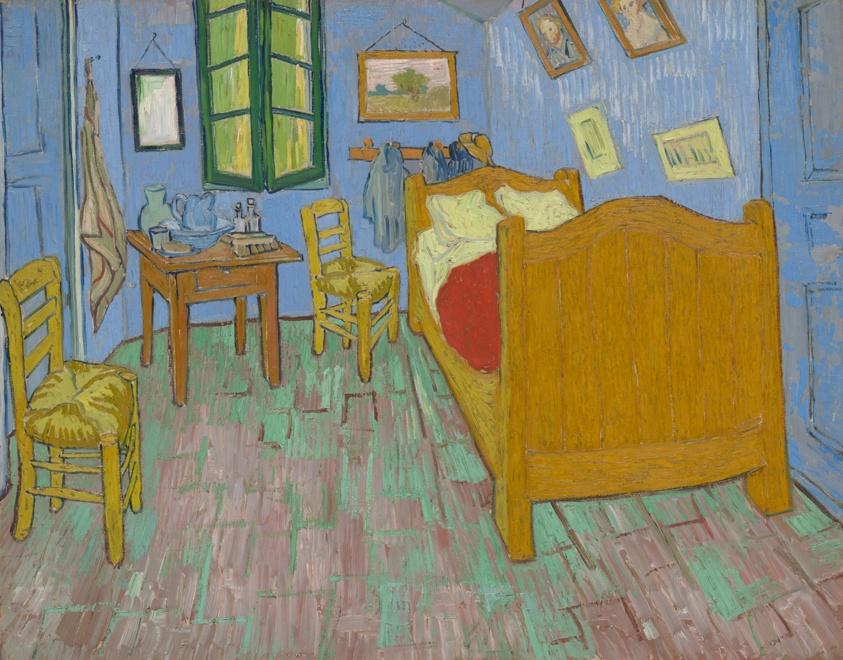 Art Institute of Chicago17 recorded worksThe Bedroom
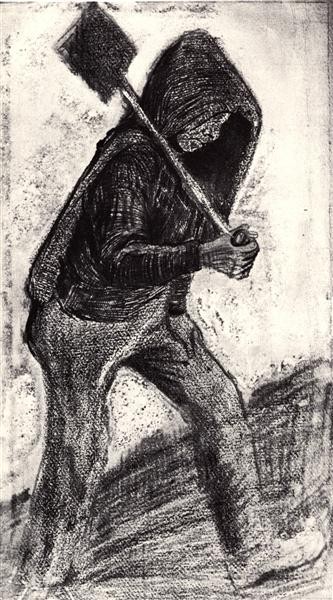 Kröller-Müller Museum8 recorded worksCoal Shoveler
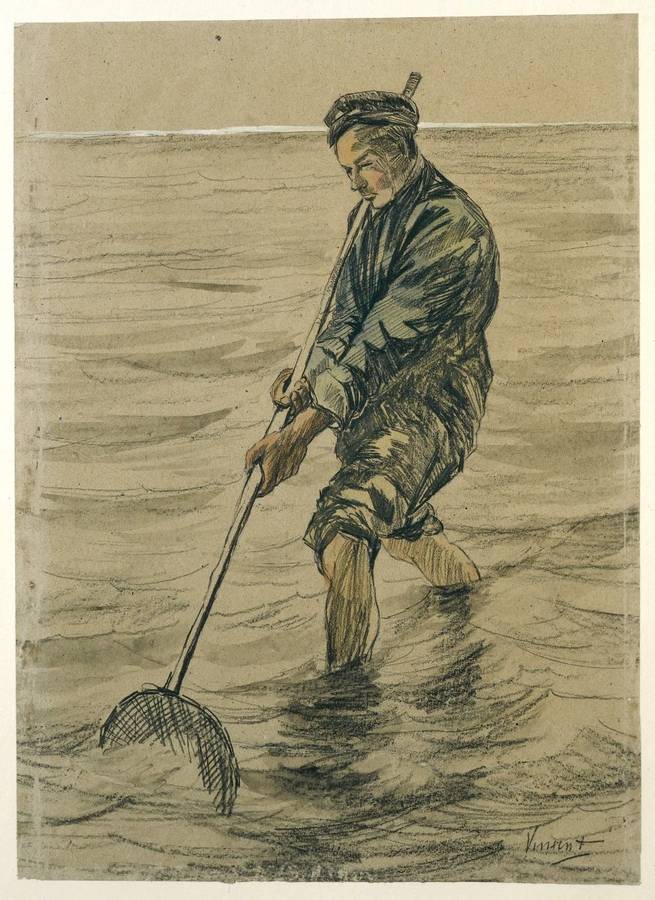 Rijksmuseum8 recorded worksSchelpenvisser
Sources 22
- Wikidata (CC0)
- Austrian museum collections: independent authority research
- National Gallery, London
- National Gallery of Art
- Institutional documentation for 50 owner-selected painting exhibitions
- Institutional documentation for 50 owner-selected painting exhibitions
- National Gallery, London
- Museum authority country review
- National Gallery, London
- Pantheon 2025 — Datawheel (CC BY-SA 4.0)
- National Gallery, London
- Museum authority country review
- Statens Museum for Kunst (SMK)
- Tate Collection metadata (October 2014 snapshot)
- CH museum and gallery creator authorities
- US museum and gallery creator authorities
- BE museum and gallery creator authorities
- Pantheon 2025 — Datawheel (CC BY-SA 4.0)
- Expanded artwork research — official museum evidence
- Austrian museum collections: independent authority research
- National Gallery, London
- Pantheon 2025 — Datawheel (CC BY-SA 4.0)
In Gombrich’s The Story of Art
- A Wheatfield, with Cypresses · 1889
- The Bedroom at Arles · 1889