The Albertina in Vienna is best known for its drawings and prints, and it also holds an important collection of modern painting. In this selection, Schongauer, Grünewald, Cranach and Bruegel stand at the early end. Liotard and Duvieux supply eighteenth-century portraits. Peter Fendi contributes two scenes of children, Rudolf von Alt views of Ischl and Split, and Anton Romako a resting tiger. The moderns include Munch, Jawlensky, Macke, Klee, Liebermann and Signac, who has more works here than anyone else. The materials range from Grünewald's chalk and Liotard's pastel to Liebermann's charcoal and Romako's watercolour. Many of the works are small sheets on which a few marks describe a face or a stretch of coastline, and several leave much of the paper bare, for reasons that differ from one artist to the next.
The works were chosen from the Albertina's documented holdings, independently of the museum, and individual works may be on loan or off display. Dates and attributions keep the qualifications given in the linked records.
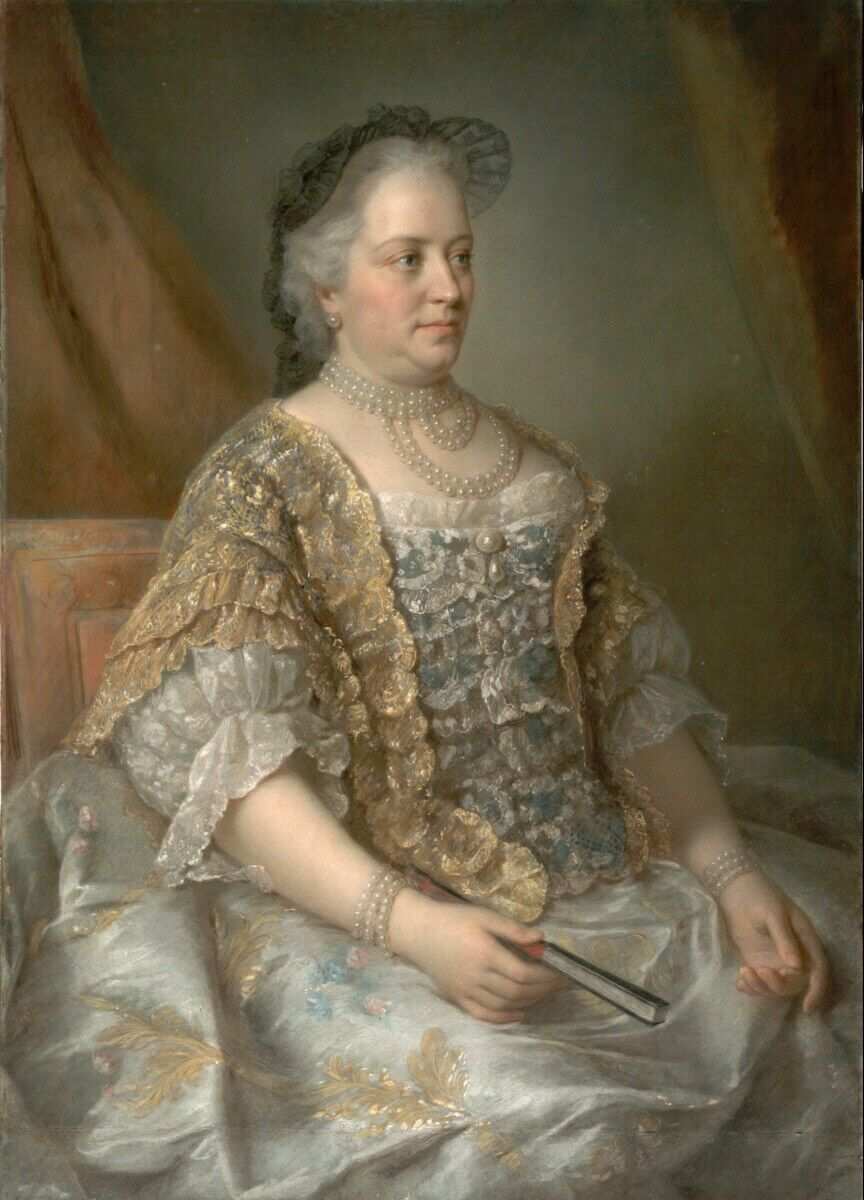
Maria Theresa, the Austrian ruler, appears in formal dress and in a pose that announces her rank, against a background kept fairly plain. The portrait does its official job. Liotard's closest attention, though, goes to the soft texture of the dress, the fine lace and the light falling on her face.
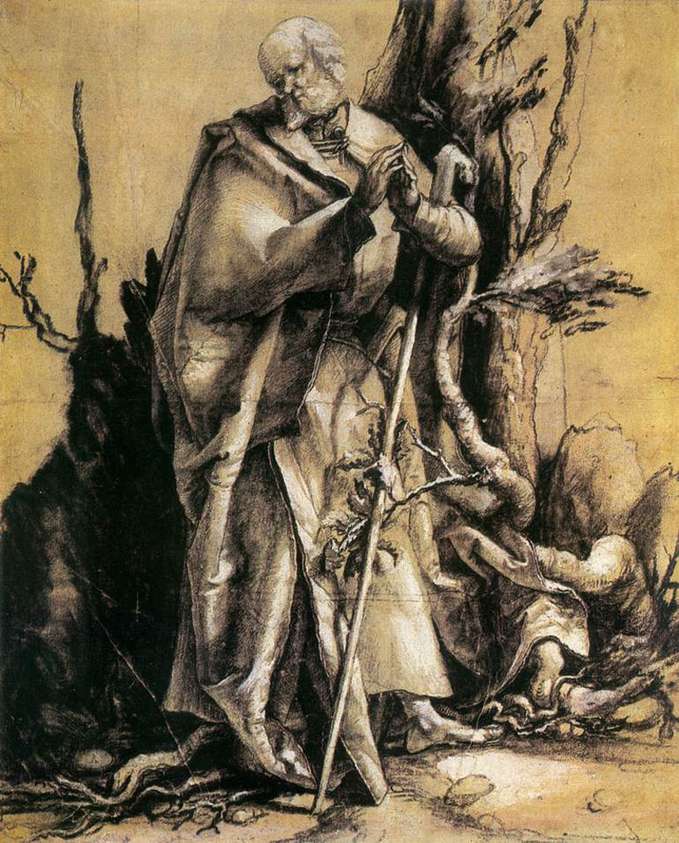
Grünewald draws the saint alone in a pale robe, surrounded by a dense, restless mass of tree trunks. The light figure is easy to find against the darker chalk, but he is no calm centre. The curving folds of his robe move much as the twisting wood does, and the forest is drawn with as much energy as the man. The drawing leaves it open whether the trees shelter him or crowd in on him.
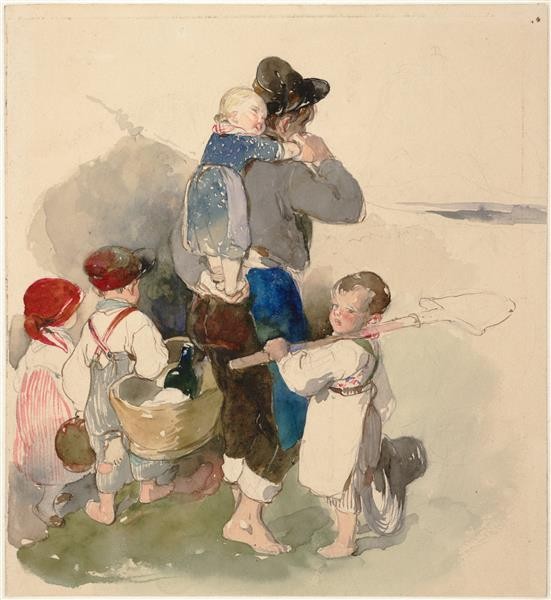
Fendi groups the children closely and tells them apart by age and by task. They carry containers and have smaller children in their charge. Their feet are bare and their clothes simple. Grouped so attractively, they could pass for a pleasant rustic scene, but the title says plainly where they are going: to work in the fields. The ones minding the smallest children are still children themselves.
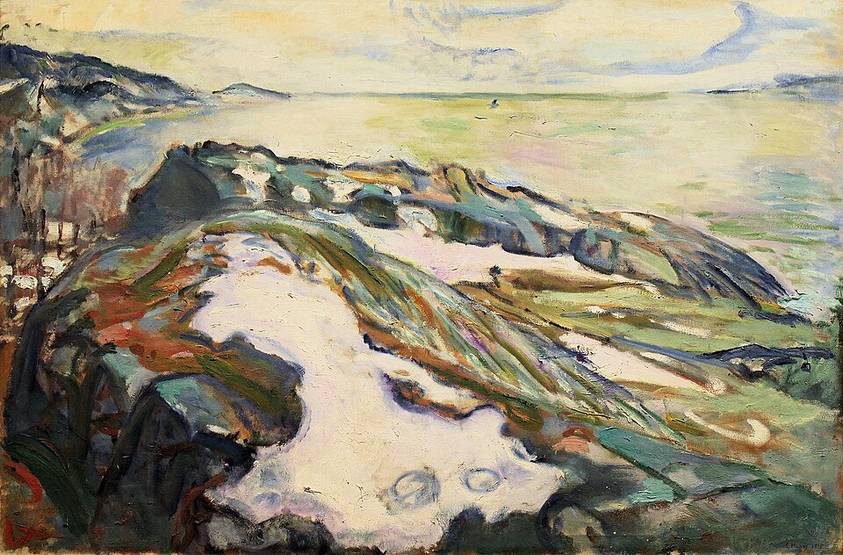
Curves run through the low rocks and the irregular shoreline, and Munch does not let them stop at the water's edge. His coloured strokes carry the same rhythm out across the water and up into the sky, so that solid ground and the air above it share one movement, even though he does not treat every surface alike.
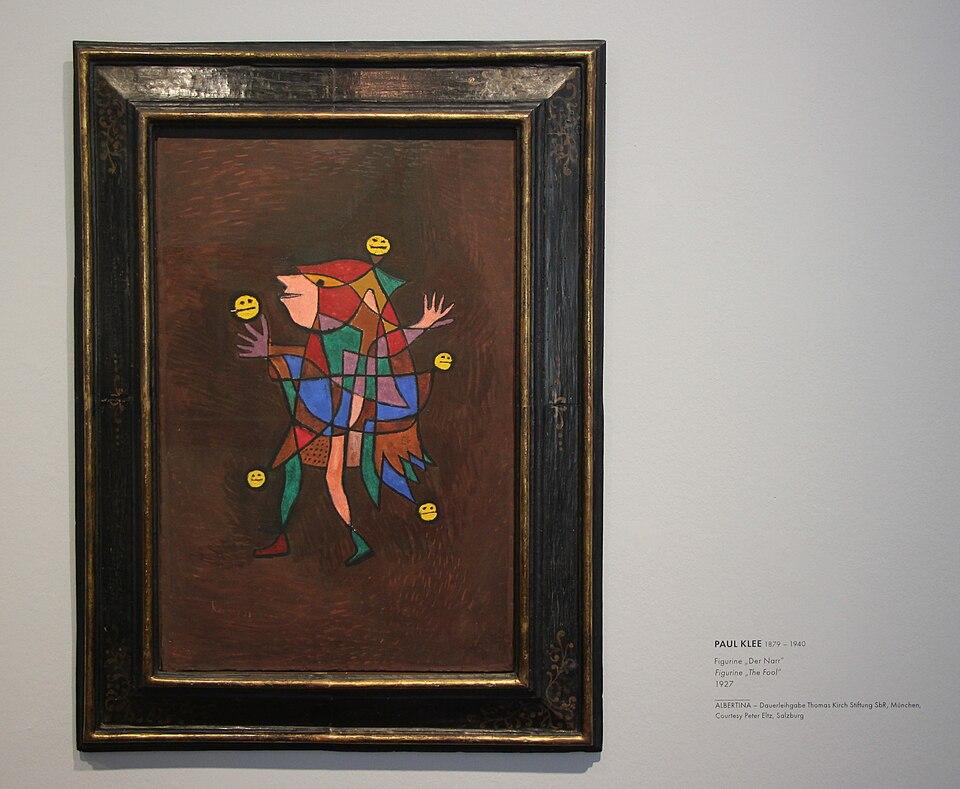
A small figure is pieced together from angular patches of colour against a dark ground. It has thin limbs, with circles beside it, and its balance looks provisional. Klee supplies just enough of a body for a character to appear and stops well short of modelling it. That precarious stance invites a link with the title, though the picture never says what kind of fool this is.
Cranach spends his effort on the face. Fine lines and restrained colour are concentrated on the eyes, the mouth and the thinning hair, while the clothing is less developed. No worked ground has been laid around the head; the warm paper simply serves as background. The thinning hair gets as much care as the eyes, which suggests a likeness more concerned with this particular face than with flattering it.
Transparent reds, blues, greens and yellows run across figures and setting alike, broken by gaps of bare paper. Macke separates one form from the next by colour more than by outline, yet the picnic is easy to read. On a second look the patches also hold up as shapes in their own right, making a pattern across the sheet as well as a party on a beach.
Duvieux's sitter is identified only by what he wears, and the picture gives some reason for that. The small oval keeps the smiling man close, with little room for surroundings, so his clothes become the setting. The fine grey stripes of the coat lead to the stronger contrasts of the red waistcoat and white neckcloth.
Bottle and bread share the title with the red wallpaper, and they have to share the picture with it as well. Birds and round forms on the wall compete for attention with the objects in front of it, because Jawlensky brings the decoration forward when it might have receded. Some sense of space remains, but the strong colour blurs the line between the objects and their background.
Children say their prayers together while an adult watches nearby. Pictures, furniture and an open door place them in a well-ordered domestic room. There is no dramatic religious event: Fendi presents devotion as a daily habit, practised and supervised at home. In his Children on Their Way to Work in the Fields, the young look after the younger out of doors. Here the watching runs from adult to child, and stays indoors.
This view of Ischl is unfinished, and that makes it more instructive than a finished sheet might be. Some buildings are fully coloured. Others are still only outlined, and broad areas of paper are left pale. The rocky hill and the town can already be identified. Rudolf von Alt's careful drawing and his fuller colour appear side by side, so the sheet shows how the view was built up.
Under a large green hat with bright flowers, the girl's face is bowed and quiet. Red crowds in around her firmly outlined head and shoulders. Jawlensky does not explain these contrasts by any natural light, and the colour has a force that her pose lacks.
Here the proverb is taken literally. A giant fish has swallowed smaller fish, and these have in turn swallowed smaller ones. Bruegel repeats the idea at several scales, so the strong prey on the weak throughout the scene. The sheet in the Albertina is the drawing of 1556. The engraving published later is a separate object, and its attribution to Bosch belongs to the history of how the image was sold.
Much of the paper is left untouched, yet the bouquet looks full. Signac spreads the flowers with loose colour and light lines, and the patterned jug and the books beside it give the arrangement a more compact base.
Slanting marks make the sky as busy as the harbour below it, so the rain clouds of the title are as much the subject as the boats. Signac places boats and façades with small patches of colour and leaves some of their edges unfixed. That broken handling suits a harbour in changing weather.
Schongauer builds the scene around a boat. Its strong outline holds the crowded figures together within a dense web of lines, so the group can be picked out before any of the details are read. Beyond it, buildings and landscape recede into a wider setting.
In this charcoal drawing, paths and beds set out the plan of the garden and the layout is easy to follow, but the planting does not quite keep to it. Liebermann draws the foliage with uneven strokes that never stay within neat borders, and in places a path's edge disappears into the plants.
Loose washes of blue, yellow and pink surround the tall church tower, the one firm vertical in this view. Façades and trees gather round it as accents of colour. With the tower holding the city in place, Signac can leave much of the sky open, unlike the busy sky over his Le Havre.
The view leads inwards through a series of openings. Through one arch another passage appears, and warm stone alternates with shadow. Small figures give the scale. They also qualify the title, because the ancient palace, though in ruins, is evidently still in use.
The resting tiger is painted more firmly than the pale ground and the plants around it, so the body keeps its weight even though the setting is not fully worked, and the uneven finish of the watercolour keeps attention on the animal. Its head is turned outwards. It lies still, but it is alert.
Explore this selection in Artline
See the selected works alongside books and events from their period, or compare when the artists lived. The books and events provide context, not evidence of direct influence. Works without confirmed dates remain in this guide.
Paper left bare
Bare paper does different work from sheet to sheet in this selection. For Cranach it is the background: the warm tone around Hans Luther's head has no worked ground over it. In Macke's picnic it breaks up the transparent colour. Signac leaves it open across much of his flower piece and in the sky at Rodez, and Romako leaves the tiger's setting pale and only partly worked around a firmly painted body. Rudolf von Alt's Ischl is a different case. Its pale areas are simply where the work stopped.
Ruskin's book is a drawing manual: a set of exercises in observing edges, tones and natural forms, with practical instructions that readers can carry out for themselves. It is not a guide to the Albertina, but the exercises are good preparation for looking at drawings in which much depends on an edge or a tone.
 Art, literature & history