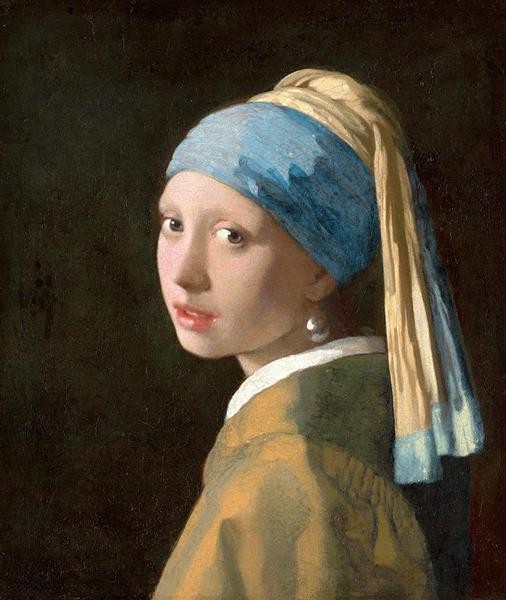
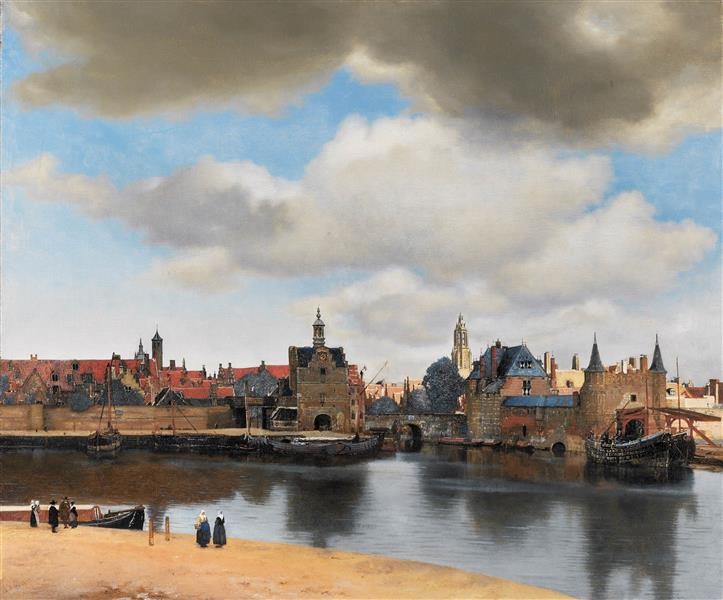
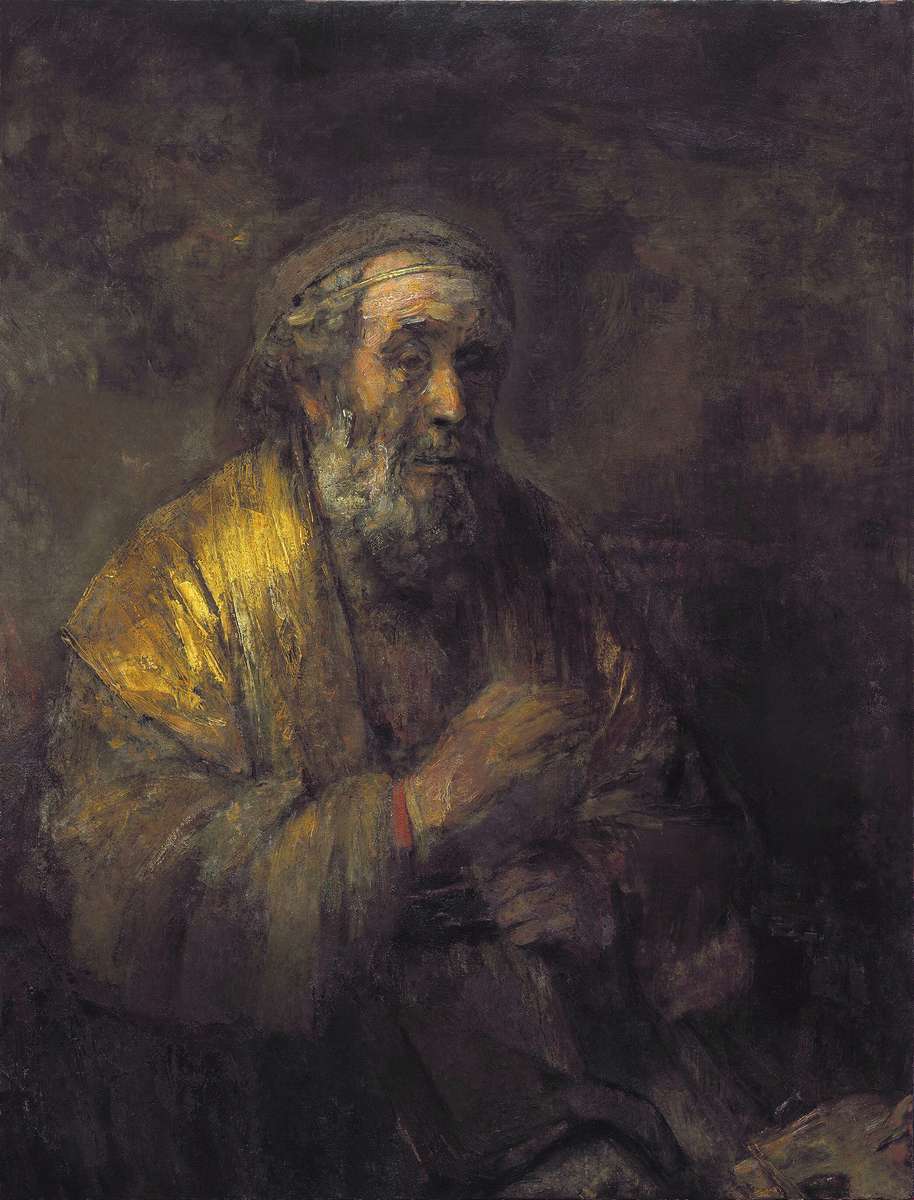
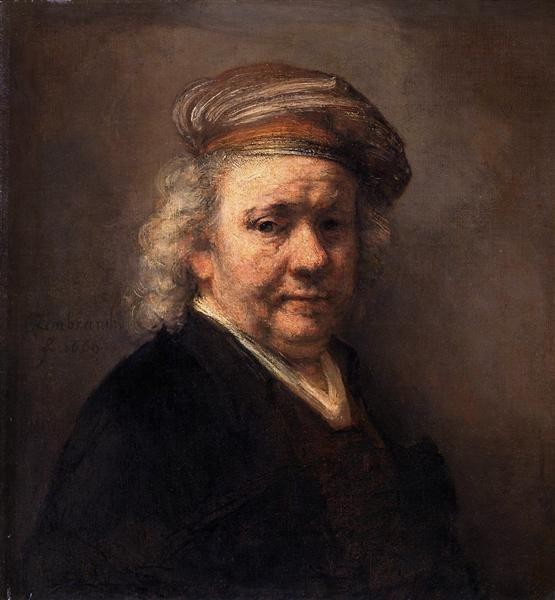
The Mauritshuis in The Hague is smaller than many national museums, but its collection includes some of the best-known Dutch paintings of the seventeenth century. Vermeer's Girl with a Pearl Earring and Carel Fabritius's Goldfinch are here, and so is the View of Delft. Seen alongside Vermeer's early Diana and Her Nymphs, these pictures show a painter moving between a single head, a townscape and a mythological scene. Rembrandt appears in several roles: he painted Dr Tulp's anatomy lesson, an imagined Homer, Andromeda in chains and his own ageing face.
Beside these famous pictures are less familiar ones, some of them decidedly odd. Willem van Haecht's picture of an ancient painter at work is largely given over to a room full of other pictures. Cornelis Symonsz van der Schalcke paints a pig slaughter in near darkness, and Frans van Mieris the Elder paints a Brothel Scene whose subject might go unnoticed without its title. The still lifes range from Pieter Claesz's table laid with herring and pipes to a single tulip in a vase by Balthasar van der Ast.
Artline chose these works from the museum's documented holdings, independently of the Mauritshuis. Dates and attributions follow the linked records, including their qualifications.
No one knows who the girl was. The painting is usually understood as a tronie, a study of a character or type, and not as a commissioned portrait. That would fit the lack of context: Vermeer gives almost no indication of where she is or what she is doing. She turns towards us out of a dark background, her mouth slightly open as if she has just noticed someone. The pearl gives the picture its title but receives remarkably little paint, only a few bright strokes.
Vermeer keeps Delft at a distance, across a strip of water. Along the skyline, sunlight falls on some buildings and leaves others in shadow, as if he were recording the weather at one particular moment. The figures in the foreground give a sense of scale, but he builds no story around them.
Rembrandt imagines the legendary Greek poet's physical presence. He gives him the face of an elderly man and a raised hand, a gesture that may suggest speech, recollection or simply thought. There is no elaborate historical setting to announce antiquity. The surroundings are subdued and the old face carries the picture.
The face is uneven in two senses: the skin is ageing, and the paint that describes it is visibly worked. Rembrandt makes no attempt to hide the material from which he builds his own likeness. A dark coat and a soft cap stay quiet, so the features hold our attention. Set beside the Homer, this is an old face that Rembrandt did not have to imagine.
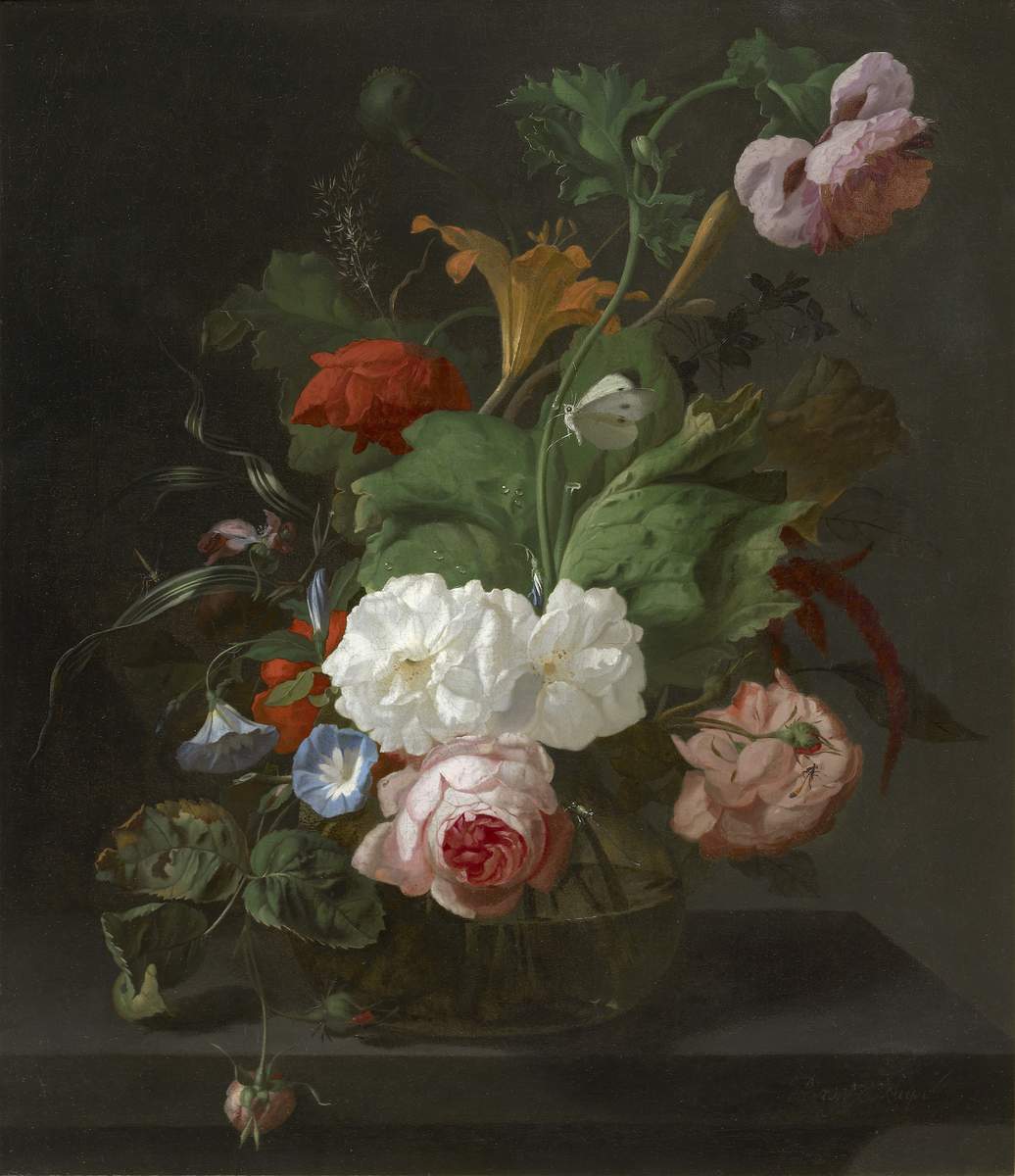
Ruysch's bouquet has no neat outline. Tall stems rise, leaves reach outwards and some flowers droop, so the arrangement spreads irregularly instead of forming a compact ornament. She tells the blooms apart by colour, and also by the direction each one faces and the stage of growth it has reached. A drooping flower is both botany and design: it marks a point in the flower's life, and it also loosens the outline of the whole.
Hals painted this portrait as a companion to his Jacob Pietersz. Olycan, which also appears in this selection. Here the costume does much of the work. A large ruff forms a bright band beneath Aletta Hanemans's face, and Hals describes the embroidery in close detail. The coat of arms places a statement of her public identity beside the record of her appearance.
The ancient story of the painter Apelles and his model Campaspe takes up only part of Van Haecht's picture. He sets the pair in a room already crowded with images, where visitors examine objects among the pictures and sculpture and doorways lead to further rooms behind. The gallery nearly swallows the story. A legend about a painter at work becomes one more item in a room of paintings, and the collection itself may be the real subject.
Andromeda's arms are raised because they are chained, and that changes how the pose reads: what might otherwise look like display becomes constraint. Rembrandt pins her close against the rock and lets the light fall on her exposed body. Nothing else from the myth is admitted, not even the rescue she can expect.
The crown in the foreground is the object named in the title, and the adults at Pharaoh's court react to what is happening around it. Their gestures show that the young Moses, small beside them, has caused the commotion. Steen does not give the room a single response. Some figures show authority, others surprise and others close attention, and the scene is built from these separate reactions.
Van Mieris gives the fabrics and furnishings a finish that may catch the eye before the reaching hand does. That hand makes the encounter more specific than a general scene of company. Even so, without the title, would anyone look for a transaction? The title, Brothel Scene, sends us back to the comfortable room to see it as the setting for a deal whose terms are never openly stated.
An angel frees Saint Peter from prison, yet Ter Brugghen gives no wider view of the escape. He reduces the episode to an exchange between two figures placed close together. The angel points; Peter, his hands held low, answers with his face.
The goldfinch sits on its perch, held there by a chain, in a picture that contains little else. Fabritius builds the bird from shadow and sparing paint instead of describing every feather. The wing is the exception. Its yellow is thickly applied, and the museum has identified scratches made through it.
Nothing dramatic happens in Dubois's landscape. The boat gives a measure for the height of the rising bank and its trees. Gradual changes of tone lead from the water into the distance, and a route across the land offers the eye a second way in.
Dr Tulp's demonstration on the arm gives the men in this group a shared reason to be present. It also lets Rembrandt combine public self-presentation with an event in progress. The men look in different directions, and their interest never settles into a single repeated expression. Beneath their faces lies the sharply foreshortened corpse. It is the subject of the lesson, and the whole composition rests on it.
This early Vermeer, with its large figures in a dark clearing, is a long way from the interiors for which he is better known. The mythological figures gather around an act of physical care, the washing of feet, and not around a dramatic episode. A kneeling figure draws attention to Diana, who needs no commanding gesture of her own.
With his body turned slightly and a hand at his side, Olycan asserts his presence. Hals keeps the dark costume from flattening into one black shape: bright lace marks edges within it. The companion portrait of Aletta Hanemans dwells on embroidery and a coat of arms, whereas this one takes its energy from the turn of the body.
Very little of the moonlit landscape promised by the title can be made out. A small pool of light shows the farm task, a hanging carcass with figures nearby. Beyond it, Van der Schalcke offers no setting that is easy to read. Even the carcass and the figures emerge from the darkness only gradually.
Bread, herring, drink and pipes share one table, each with its own use. Claesz keeps to a restrained palette, so colour does little to tell his materials apart. Changes of surface do that work instead, separating stoneware from glass and both from the clay of a pipe stem.
Claesz's table of bread and herring is plain, and Van Kipshaven's is abundant. His fruit seems to spill out of its containers, but heavier vessels and the edge of the table hold the arrangement in place. Small highlights catch individual skins against the dark setting and pick out each piece of fruit from the mass.
One tulip, with its stripes and bent leaves, is enough to organise the picture. These are exactly the details that could be lost in a bouquet as crowded as Ruysch's. Van der Ast leaves space around the glass and the butterfly, so the relations between the few objects are easy to follow.
Explore this selection in Artline
See the selected works alongside books and events from their period, or compare when the artists lived. The books and events provide context, not evidence of direct influence. Works without confirmed dates remain in this guide.
Stories held back
Several of the narrative pictures here stop short of the dramatic moment. Rembrandt shows Andromeda before any rescue, Ter Brugghen frees Saint Peter without letting us see him go anywhere, and Vermeer gathers Diana's company around the washing of feet. Steen is the exception, and a useful one. His young Moses has already caused the commotion, and what Steen paints is the court's mixed response to it. Rembrandt's anatomy lesson falls somewhere between: a demonstration is under way, but the painting seems as concerned with the men attending it as with what Dr Tulp is showing them. The subjects vary too much to suggest a shared rule. Even so, across these pictures much of the interest lies in waiting, reacting and watching, not in the event itself.
Further reading
Walter Liedtke · Read online or download · English
Walter Liedtke's two-volume catalogue is free to read online or download. It covers the Metropolitan Museum of Art's own Dutch paintings, not those in The Hague. For readers of this guide, its main value lies in the extended essays on portraiture, still life and scenes of daily life, which give background on the kinds of painting found here.
 Art, literature & history