 Art, literature & history
01
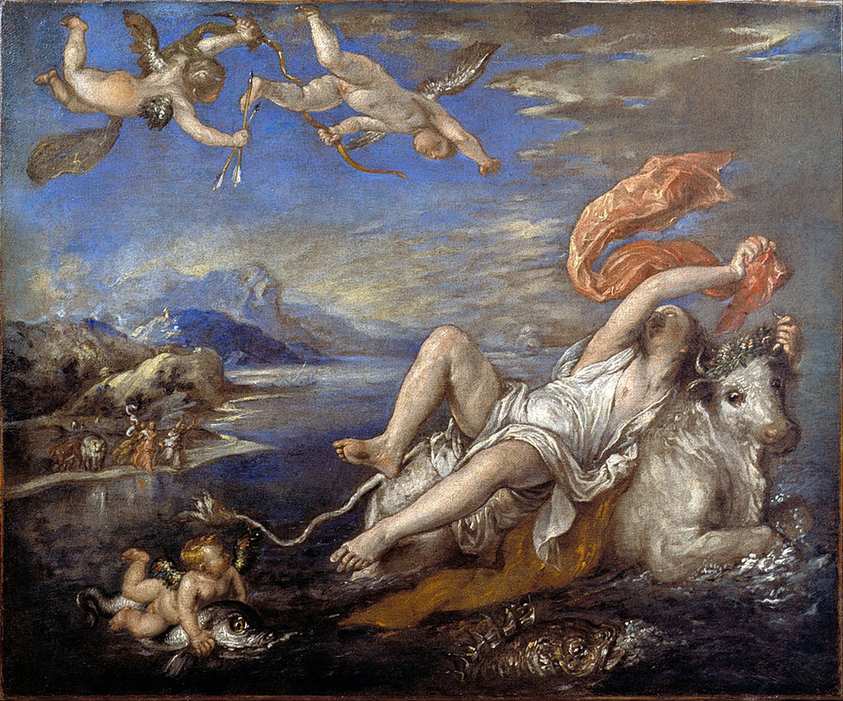
The Abduction of Europa
Europa is struggling to keep her balance as the white bull, Zeus in disguise, carries her out into the water, and Titian shows the effort in her limbs and in her clothing. Rubens later made a copy of the painting.
Boston, United States
Twenty works, from Giotto to Sargent, in the collection Isabella Stewart Gardner built and arranged in Boston
Isabella Stewart Gardner arranged the paintings, furniture and objects in her Boston museum so that each room would be seen as a whole. The museum preserves much of that arrangement, and the collection remains closely tied to her tastes and to its personal history.
The twenty works chosen here run from a panel by Giotto to John Singer Sargent, who appears more often than any other artist. They include Titian's Abduction of Europa, two works by Botticelli and Piero della Francesca's Hercules, a detached fresco. Gardner herself is here as well, in Anders Zorn's portrait of her in Venice, and so are his pictures of passengers on an omnibus and of a woman washing by the water. A few threads run through the later works. Music and dance link Sargent's El Jaleo and his portrait of the musician Charles Martin Loeffler with Léon Bakst's two costume designs, for Ida Rubinstein and Anna Pavlova. Venice connects Zorn's portrait with John Ruskin's study of the Casa Loredan.
Artline chose these works from documented museum holdings, independently of the museum. A work's place in the collection does not mean it will be on view: any of these works may be on loan or off display, and works on paper are not always shown. Where a record qualifies a date or an attribution, that qualification is kept here.
Europa is struggling to keep her balance as the white bull, Zeus in disguise, carries her out into the water, and Titian shows the effort in her limbs and in her clothing. Rubens later made a copy of the painting.
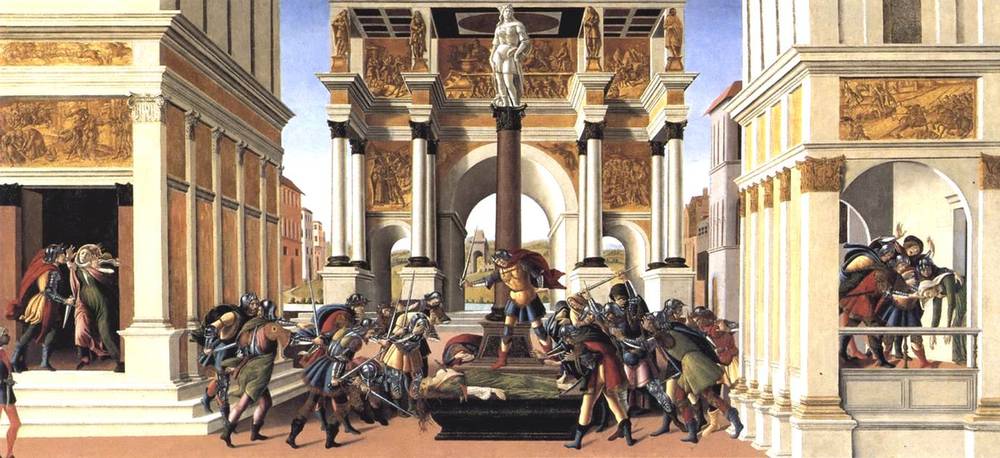
Botticelli tells several episodes of the Roman story of Lucretia within a single architectural view. The buildings divide the panel into separate zones of action, but they also hold the episodes together in one space. The open square at the centre carries the weight of the story. There, a body and the gesturing crowd around it turn a private injury into a public matter.
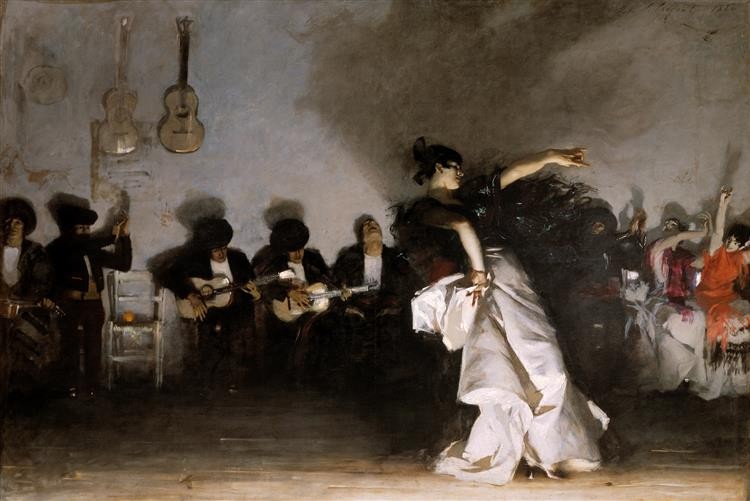
Hard light from below catches the dancer's skirt and arms and throws her face into shadow, while her own enormous shadow carries the movement up the wall. Sargent sets her sharply angled body against the seated musicians behind her, whose repeated poses keep up a regular rhythm. The painting is more than three metres wide, but it has almost no depth. Dancer and musicians alike are pressed into a shallow foreground, so the picture's great width plays out across its surface.
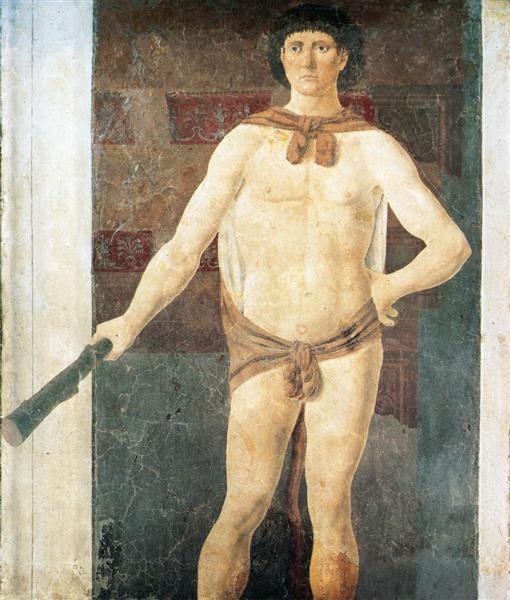
Piero della Francesca painted this Hercules in fresco, and it has since been detached from its original setting. The club identifies him. Beyond that, Piero gives him nothing to do: none of the labours or enemies from his story appear. The nearly nude figure simply stands, firmly planted, in a shallow architectural niche that his proportions seem calculated to fill.
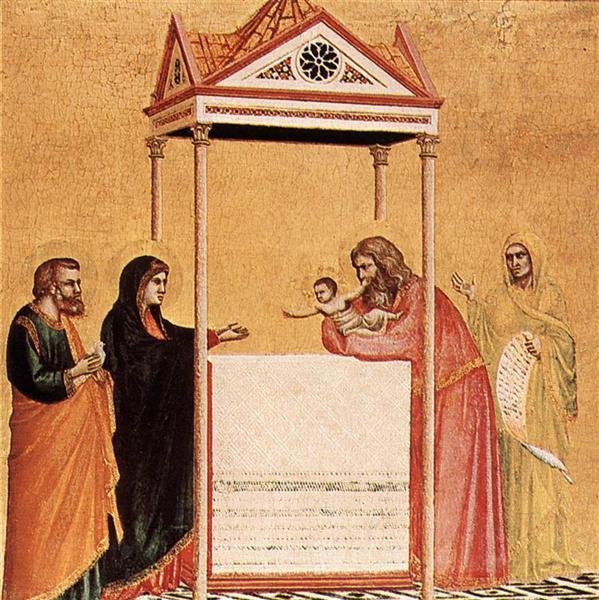
The earliest work in this selection turns on an exchange of gestures. Adults reach across a small altar, and the infant reaches back; Giotto measures the moment of sacred recognition by the distance between their hands. The pointed canopy and compact architecture give each participant a distinct place, and the child's reaching gesture cuts across that order.
Giotto's child reaches out across an altar, while Botticelli's is being held. Madonna, infant and angel are packed into a close group with their heads inclined, and behind them there is only a narrow glimpse of landscape. The panel was made for devotion, yet much of what it shows is the practical business of holding a small body, and the whole group is arranged around that task.
Whistler's title names the colours before the place, and the painting has the same priorities. Sea, shore and sky are given closely related tones, so the horizontal bands differ only slightly from one another. A small standing figure breaks into them and supplies a measure of distance. Otherwise very little happens on the beach at Trouville. What holds the view together is the fine adjustment of colour from band to band.
Zorn's passengers are packed into a cramped omnibus, but they do not form a group. Light from the window picks out some faces and bits of clothing; other figures fall into shadow or are partly hidden. They sit pressed together, yet their attention never meets.
According to her husband's diary, Gardner had been watching fireworks and was calling the guests outside to see them. Zorn paints the invitation as it happens. Brightly lit, she stands in the doorway between the interior and the dark Venetian balcony, caught mid-gesture, with her arms stretched towards the open doors on either side.
The title names Juana of Austria but calls her companion simply "a Young Girl", and the painting follows the same order. The difference in height sets up a hierarchy at once, and the formality of their clothing reinforces it. Anguissola keeps both expressions contained against the dark setting. Neither of them smiles, and they share no activity. Whatever bond exists between them has to be read from their closeness, from small adjustments of posture and from where the girl is placed.
The Roman tower of the title rises as a strong upright among the riverside buildings at Andernach, but Turner gives so much of the view to the broad sky that the tower never dominates it. Lower down, boats and figures keep the water busy.
Ruskin was studying the Casa Loredan, not making a finished drawing, and the sheet shows where his attention went. Some parts of the Venetian façade are given colour and detail, while others are left as light outlines. Turner places his tower at Andernach inside a wide river view. Ruskin goes close to a single building and is selective even there, moving from arches to ornament. The barely drawn areas may be forms he needed only for positioning the details he wanted to examine more closely.
Love's Greeting is an encounter that leaves almost no room around itself. Rossetti joins his figures tightly and fills nearly all the remaining space with flowers, patterns and an inscription, so the scene is enclosed and removed from any recognisable setting. Most of the picture's intensity comes from that ornament, since there is little action or setting to carry feeling otherwise. The effect is precious, in both senses of the word.
This costume design for Ida Rubinstein as Saint Sebastian is worked out for the theatre. The broad blue cloak makes the figure a strong silhouette before any decorative detail can be made out. Bakst sets it against red clothing and leaves the rest of the sheet blank. A costume has to read from a distance as well as close to. Here the large, simple shape would carry across an auditorium, and the pattern inside it is left for anyone nearer.
Compared with the Rubinstein design, this one is all movement. The arms extend and the feet and limbs angle in opposing directions. The short skirt flares and a long scarf trails behind, so the fabric enlarges every action of the dancer who would wear it. In the "Oriental Fantasy" of the title, fantasy is the accurate word. This is theatrical invention, and it tells us nothing reliable about any particular culture's dress.
In El Jaleo Sargent painted musicians at work, but Charles Martin Loeffler is not playing. Enough of the instrument shows to identify him as a musician. Sargent turns the pale face away from the viewer and lets the dark clothing keep most of the body in reserve.
Sargent paints the tent with the same loose strokes as the trees and ground around it, so its sunlit fabric, with its shifting light and shadow, becomes one more surface in the landscape. The open entrance makes it plain that this is only temporary shelter in the Rockies.
Incense smoke, hanging fabric and pale clothing together blur the boundary between figure and room, and the body can be made out only through successive veils. The smoke is part of the ritual named in the title. It also controls what can be seen, diffusing the light and softening every edge.
The title describes the sitter by her clothes, and this portrait, attributed to Paolo Uccello, largely does the same. She is held in strict profile and never turns towards the viewer. Her pearls and patterned sleeve speak of status and of how she wished, or was meant, to be seen. Her face stays composed and reserved.
A woman bends to her morning washing beside rocks and shallow water. Zorn keeps her posture clear, so the action can be read at once, and lets the light around her break into scattered reflections.
See the selected works alongside books and events from their period, or compare when the artists lived. The books and events provide context, not evidence of direct influence. Works without confirmed dates remain in this guide.
At the Gardner, a room's architecture and furnishings can change a painting's apparent scale and associations as much as the neighbouring pictures do, so a work seen there may look rather different from its description here. This selection is ordered by theme, not as a route through the building.
Leonardo's treatise, here in John Francis Rigaud's English translation, sets out working principles for painters, including notes on gesture and on arranging figures. Those notes raise questions worth putting to the Italian paintings in this selection. Try them first on the still, single figure of Piero's Hercules and the compact group in Botticelli's Madonna, and then on the many intersecting actions spread across The Story of Lucretia.