 Art, literature & history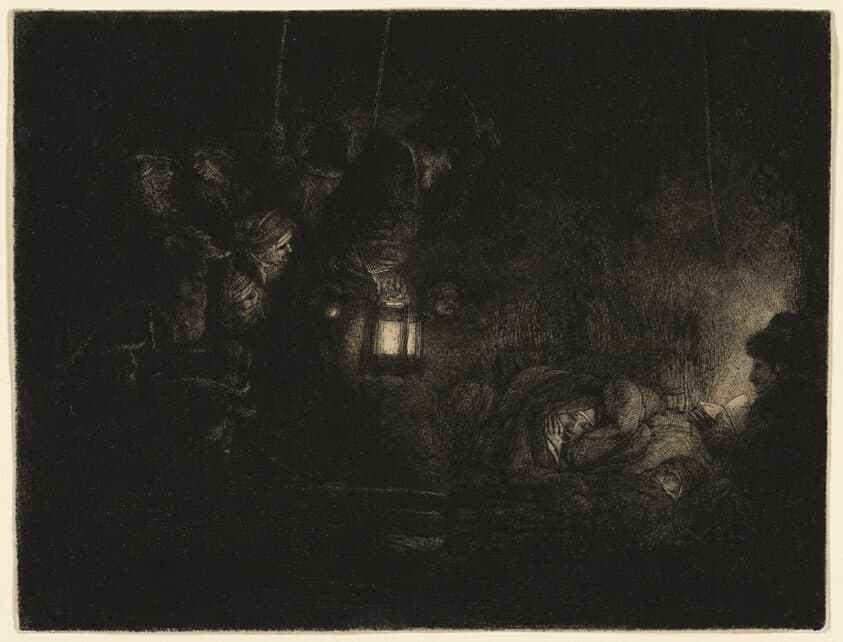
The Adoration of the Shepherds: A Night Piece
c. 1657
- Dating
- Approximate date range
- Held at
- Art Institute of Chicago
- Medium
- Etching, drypoint, and burin in black on ivory laid paper
- Dimensions
- Image/sheet, cut within platemark: 15.2 × 19.8 cm (6 × 7 13/16 in.)
- Collection no.
- 1938.1735
- Attribution
- By the artist
- Image rights
- CC0 1.0License details
Rembrandt van Rijn. The Adoration of the Shepherds: A Night Piece. Art Institute of Chicago. CC0 1.0. Compressed full-frame reproduction.
Collection: Art Institute of Chicago
About this artwork
The Adoration of the Shepherds: A Night Piece — Rembrandt van Rijn. c. 1657.
Medium: Etching, drypoint, and burin in black on ivory laid paper. Dimensions: Image/sheet, cut within platemark: 15.2 × 19.8 cm (6 × 7 13/16 in.).
Collection record: Art Institute of Chicago, Chicago. Museum connection according to this source; current display unverified.
Rembrandt was printing mezzotint-like prints before the medium existed. Ludwig von Siegen’s invention of mezzotint engraving may even owe something to his encounter with Rembrandt’s prints during a pivotal 1642 visit to Amsterdam. Several of Rembrandt’s works dating from the 1650s—when few were familiar with the mezzotint process—were traditionally called “dark manner” or “night pieces.” In this unusually nocturnal Adoration , tardy shepherds arouse the Holy Family. The mezzotint process was an important part of Rembrandt’s career: copies of Rembrandt’s prints were made entirely in mezzotint, occasionally his drypoint lines were refreshed using mezzotint effects, and some of his plates were finished posthumously by other hands using the method.
Description: © Art Institute of Chicago, original record, CC BY 4.0. HTML formatting removed; wording retained. Other artwork metadata: CC0.
Source: official collection record. Metadata selected and normalized by Artline from the source export, accessed 10 September 2026; no museum endorsement. Reproduction rights are separate.
Location checked Sep 10, 2026. This does not indicate whether the work is on display.