 Art, literature & history
Pisanello
1395–1455
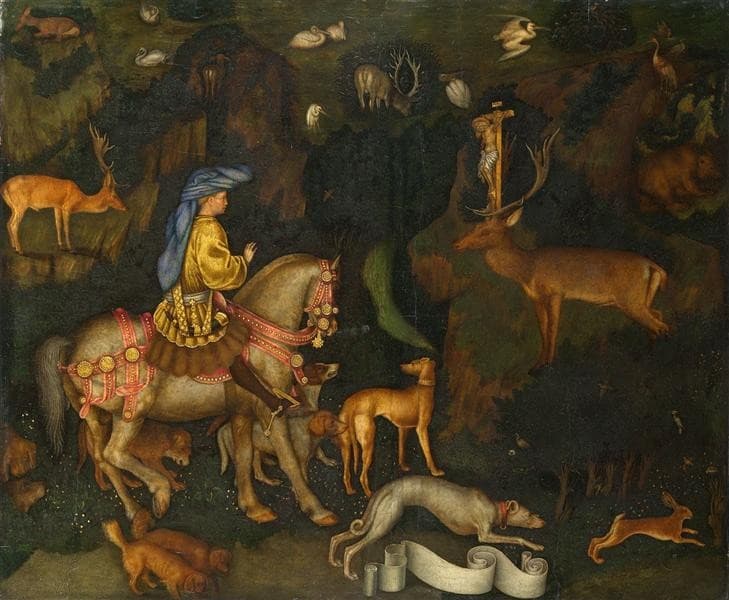
Selected artwork
The Vision of Saint Eustace
1438
Other names (11)
Antonio di Puccio da Cereto, Antonio di Puccio Pisano, Antonio di Puccio Pisano Pisanello, Antonio Pisanello, Antonio Pisano, Antonio Pisano Pisanello, Enea Pisano, Il Pisanello, Spisanello, Vittore Pisano, V. Pisano
Biography
Pisanello (c. 1380/1395 – c. 1450/1455), born Antonio di Puccio Pisano or Antonio di Puccio da Cereto, also erroneously called Vittore Pisano by Giorgio Vasari, was one of the most distinguished painters of the early Italian Renaissance and Quattrocento. He was acclaimed by poets such as Guarino da Verona and praised by humanists of his time, who compared him to such illustrious names as Cimabue, Phidias and Praxiteles.
Pisanello is known for his resplendent frescoes in murals, portraits, easel pictures, and a number of drawings such as those in the Codex Vallardi (Louvre). He is the most important commemorative portrait medallist in the first half of the 15th century, and he can claim to have originated this important genre.
He was employed by the Doge of Venice, the Pope in the Vatican and the courts of Verona, Ferrara, Mantua, Milan, Rimini, and by the King of Naples. He stood in high esteem in the Gonzaga and Este families.
Pisanello had a number of his works wrongly ascribed to other artists such as Piero della Francesca, Albrecht Dürer and Leonardo da Vinci, to name a few. While most of his paintings have perished, a number of his drawings and medals have survived.
Wikipedia contributors. Opening excerpt, formatted for reading. CC BY-SA 4.0. Source revision.
Artworks by year
Loading chronology…Museum / collectionAll collections
Finding recorded artworks…
Museums & collections
Documented holdings of works attributed to Pisanello. Check the museum’s record for current display information.
- J. Paul Getty Museum1 recorded work