 Art, literature & history
Pablo Picasso
1881–1973
Selected artwork
Guernica
1937
Life & artwork timeline
1881–1973
2 artwork previews
Select a dot to preview a work. Dots show selected works and the current gallery page.
Guernica
1937
Other names (9)
Pablo Diego José Francisco de Paula Juan Nepomuceno Cipriano de la Santísima Trinidad Ruiz Picasso, Pablo Diego José Francisco de Paula Juan Nepomuceno Crispín Cipriano de la Santísima Trinidad María de los Remedios Alarcón y Herrera Ruiz Picasso, Pablo Diego José Francisco de Paula Juan Nepomuceno Crispín Crispiniano de la Santísima Trinidad María de los Remedios Alarcón y Herrera Ruiz Picasso, Pablo Diego José Francisco de Paula Juan Nepomuceno Crispín Crispiniano de la Santissima Trinidad Ruiz Blasco Picasso, Pablo Ruiz, Pablo Ruiz y Picasso, Pablo Ruys, Pablo Ruys Picasso, P. Picasso
Biography
Pablo Ruiz Picasso (25 October 1881 – 8 April 1973) was a Spanish painter and sculptor who spent most of his adult life in France. One of the most influential artists of the 20th century, he is known for co-founding the Cubist movement, the invention of constructed sculpture, the co-invention of collage, and for the wide variety of styles that he helped develop and explore. Among his most famous works are the proto-Cubist Les Demoiselles d'Avignon (1907) and the anti-war painting Guernica (1937), a dramatic portrayal of the bombing of Guernica by German and Italian air forces during the Spanish Civil War. His career spanned more than 76 years, from his late teens to his death in 1973.
Beginning his formal training under his father José Ruiz y Blasco aged seven, Picasso demonstrated extraordinary artistic talent from a young age, painting in a naturalistic manner through his childhood and adolescence. During the first decade of the 20th century, his style changed as he experimented with different theories, techniques, and ideas. After 1906, the Fauvist work of the older artist Henri Matisse motivated Picasso to explore more radical styles, beginning a fruitful rivalry between the two artists, who subsequently were often paired by critics as the leaders of modern art.
Picasso's output, especially in his early career, is often periodized. While the names of many of his later periods are debated, the most commonly accepted periods in his work are the Blue Period (1901–1904), the Rose Period (1904–1906), the African-influenced Period (1907–1909), Analytic Cubism (1909–1912), and Synthetic Cubism (1912–1919), also referred to as the Crystal period. Much of Picasso's work of the late 1910s and early 1920s is in a neoclassical style, and his work in the mid-1920s often has characteristics of Surrealism. His later work often combines elements of his earlier styles.
Exceptionally prolific throughout the course of his long life, Picasso achieved universal renown and immense fortune for his revolutionary artistic accomplishments, and became one of the best-known figures in 20th-century art.
Text sources
Artistic connections
Explore the people and evidence around Pablo Picasso.
Teachers & influences
3 of 18You are exploring
Pablo Picasso
1881–1973Influence & legacy
3 of 54Artworks by year
Loading chronology…Museum / collectionAll collections
Finding recorded artworks…
Exhibition records
View exhibitions →Museums & collections
Documented holdings of works attributed to Pablo Picasso. Check the museum’s record for current display information.
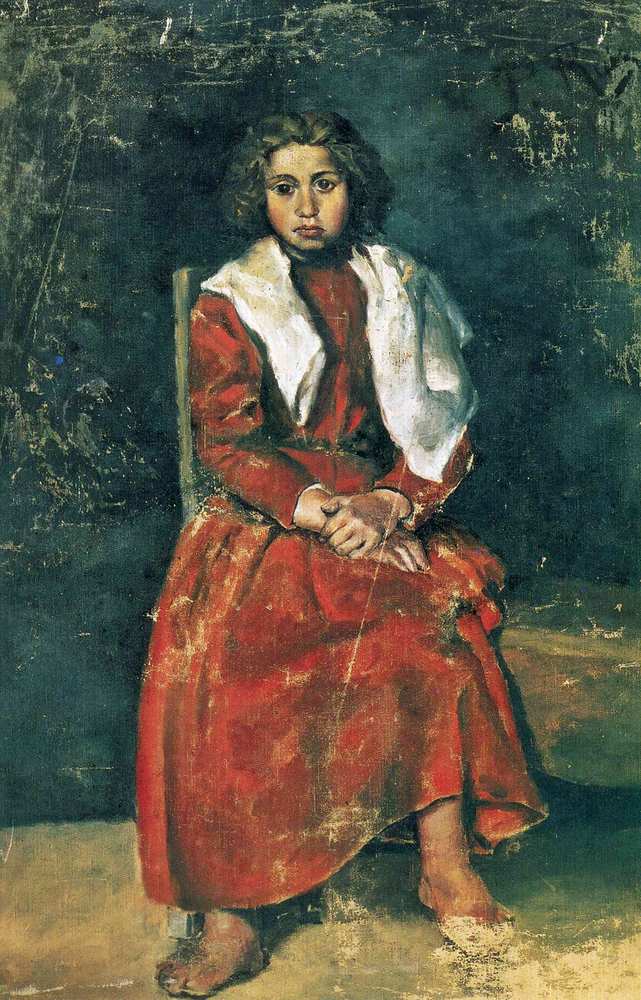 musée national Picasso - Paris — Paris2,838 recorded worksThe barefoot girl
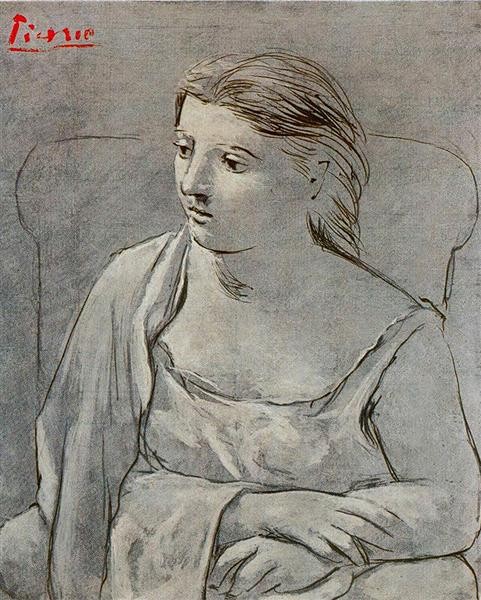 The Metropolitan Museum of Art398 recorded worksWoman in White
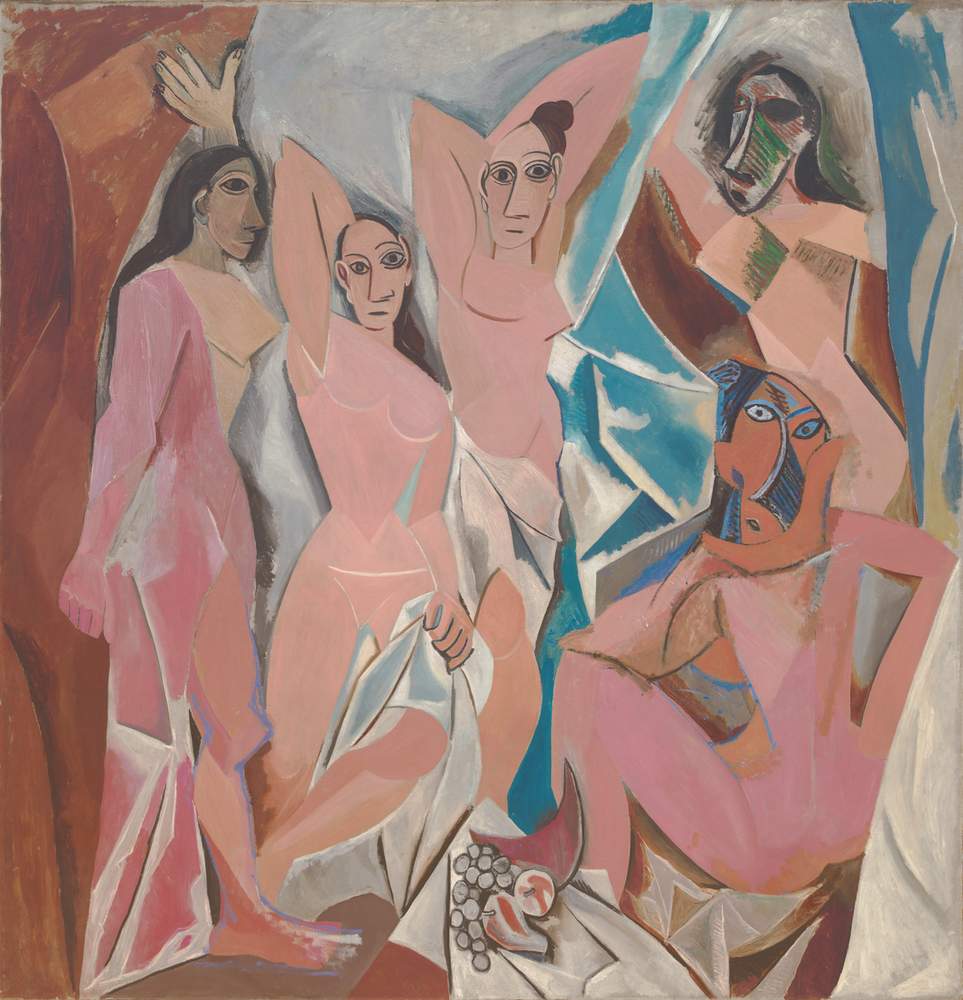 Museum of Modern Art259 recorded worksLes Demoiselles d'Avignon
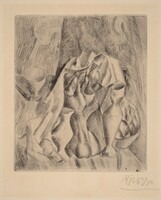 National Gallery of Art247 recorded worksStill Life with Fruit Bowl (Nature morte au compotier)
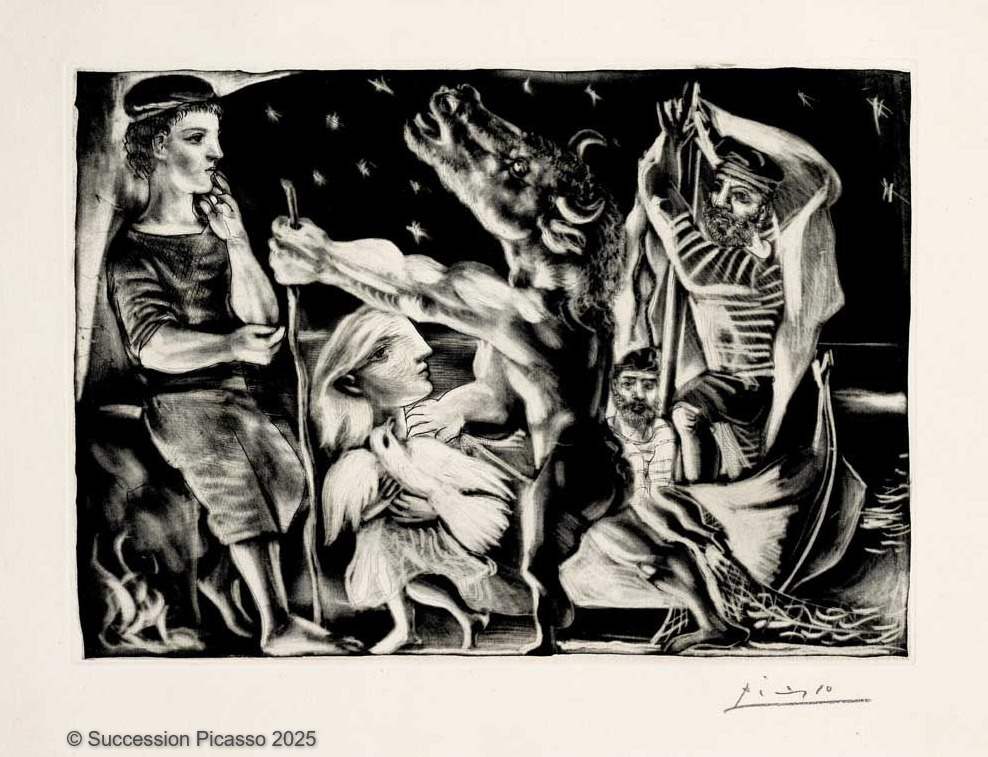 musée Picasso — Antibes140 recorded worksMinotaure aveugle guidé par Marie-Thérèse au pigeon dans une nuit étoilée
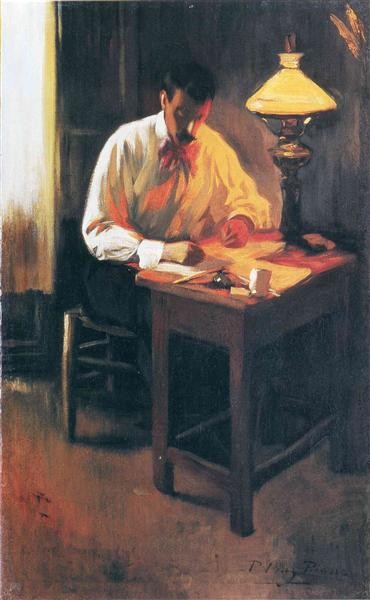 Art Institute of Chicago130 recorded worksPortrait of Josep Cardona
Sources 20
- Wikidata (CC0)
- Spanish painters: selected museum and authority research
- National Gallery of Art
- Official Cleveland, Fitzwilliam and Art Platform Japan exhibition records
- Institutional documentation for 50 owner-selected painting exhibitions
- Institutional documentation for 50 owner-selected painting exhibitions
- Museum authority country review
- Pantheon 2025 — Datawheel (CC BY-SA 4.0)
- Museum authority country review
- Tate Collection metadata (October 2014 snapshot)
- Statens Museum for Kunst (SMK)
- Polish museum and gallery creator authorities
- CH museum and gallery creator authorities
- US museum and gallery creator authorities
- BE museum and gallery creator authorities
- Pantheon 2025 — Datawheel (CC BY-SA 4.0)
- Expanded artwork research — official museum evidence
- Artline ten-source identity reconciliation — verified foreground batch
- SMK — verified pre-1990 physical pictorial collection records
- Pantheon 2025 — Datawheel (CC BY-SA 4.0)
In Gombrich’s The Story of Art
- Violin and Grapes · 1912
- Head · 1928