 Art, literature & history
Hieronymus Bosch
c. 1450–1516
Selected artwork
The Garden of Earthly Delights Triptych
1490–1500
Museo Nacional del Prado
Life & artwork timeline
c. 1450–1516
3 artwork previews
Select a dot to preview a work. Dots show selected works and the current gallery page. Ranges begin at their recorded starting year.
The Garden of Earthly Delights Triptych
1490–1500
Other names (31)
Ambrosius Bosch, Bosch, El Bosco, Hieronimus Bosch, Hieronimus de Bosch, Hieronymous Bosch, Hieronymus Bosch van Aiken, Hieronymus Bosco, Hieronymus van Aeken, Hieronymus Van Aken, Hieronymus van Aken Bosch, Hieronymus van Bos, Ieronim Boskh, Ierōnymos Bos, Jeroen Anthoniszoon van Aken, Jeroen Bosch, Jeroen van Aken, Jerome Bosch, Jerome Boss, Jerome van Aken, Jerome Van Aken Bosch, Jerominus Bos, Jeronimo Bosch, Jeronimo Bosque, Jeronimus Bos, Jeronimus Bosch, Jheronimus Aquen, Jheronimus Bosch, Jheronimus van Aeken, Jheronymus Bosch, Jheronymus van Aken
Biography
Hieronymus Bosch (; Dutch: [ɦijeːˈroːnimʏz ˈbɔs] ; born Jheronimus van Aken [jeːˈroːnimʏs fɑn ˈaːkə(n)]; c. 1450 – 9 August 1516) was a Dutch painter from Brabant. He is one of the most notable representatives of the Early Netherlandish painting school. His work, generally oil on oak wood, mainly contains fantastic illustrations of religious concepts and narratives. Within his lifetime, his work was collected in the Netherlands, Austria, and Spain, and widely copied, especially his macabre and nightmarish depictions of hell.
Little is known of Bosch's life, though there are some records. He spent most of it in the town of 's-Hertogenbosch, where he was born in his grandfather's house. The roots of his forefathers are in Nijmegen and Aachen (reflected in his surname, Van Aken). His original, fantastical style cast a wide influence on northern art of the 16th century; Pieter Bruegel the Elder was his best-known follower.
Today, Bosch is seen as a highly individualistic artist who offered profound insights into humanity's desires and deepest fears. Attribution of his work has been especially difficult; today only about 25 paintings are confidently identified as his, along with eight drawings. About another half-dozen paintings are confidently attributed to his workshop. His most acclaimed works consist of three triptych altarpieces, particularly The Garden of Earthly Delights.
Text sources
Artistic connections
Explore the people and evidence around Hieronymus Bosch.
Teachers & influences
0No connections recorded.
You are exploring
Hieronymus Bosch
c. 1450–1516Influence & legacy
3 of 9Artworks by year
Loading chronology…Museum / collectionAll collections
Finding recorded artworks…
Exhibition records
View exhibitions →Museums & collections
Documented holdings of works attributed to Hieronymus Bosch. Check the museum’s record for current display information.
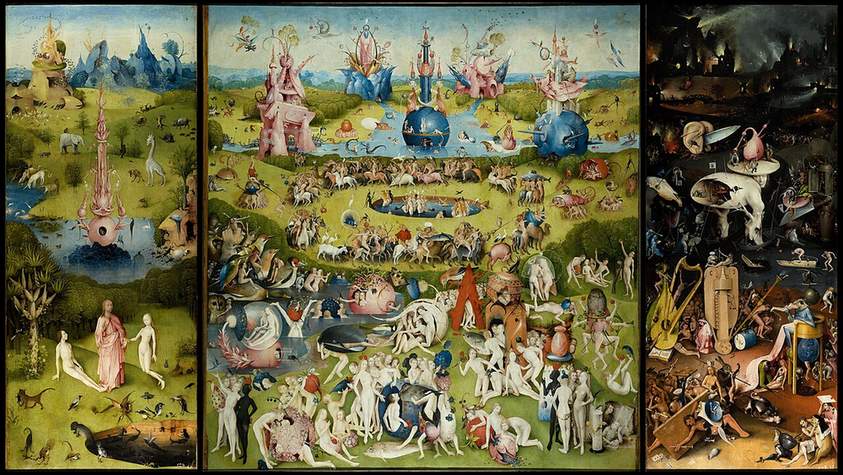 Museo Nacional del Prado13 recorded worksThe Garden of Earthly Delights Triptych
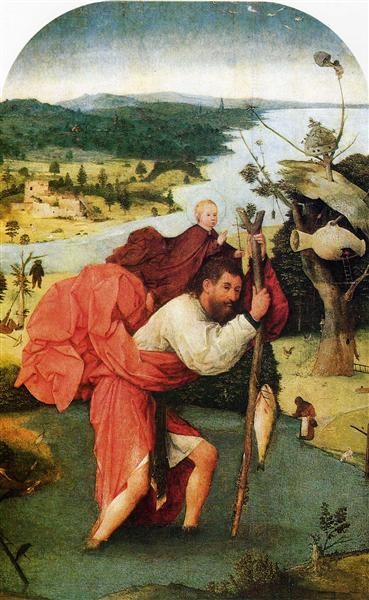 Museum Boijmans Van Beuningen9 recorded worksSaint Christopher
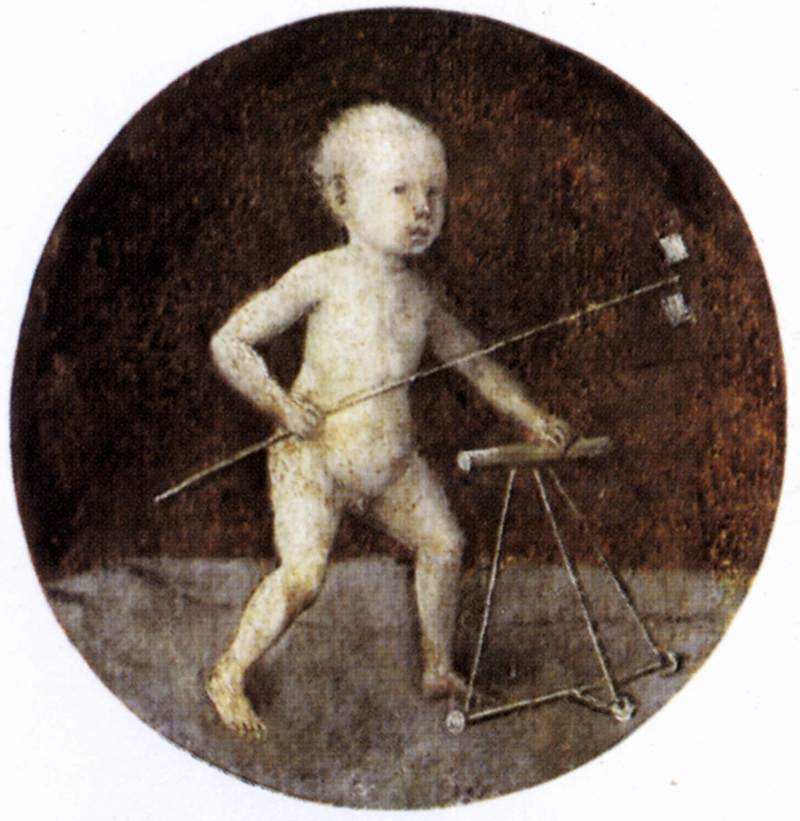 Kunsthistorisches Museum, Gemäldegalerie2 recorded worksChrist Child with a Walking Frame
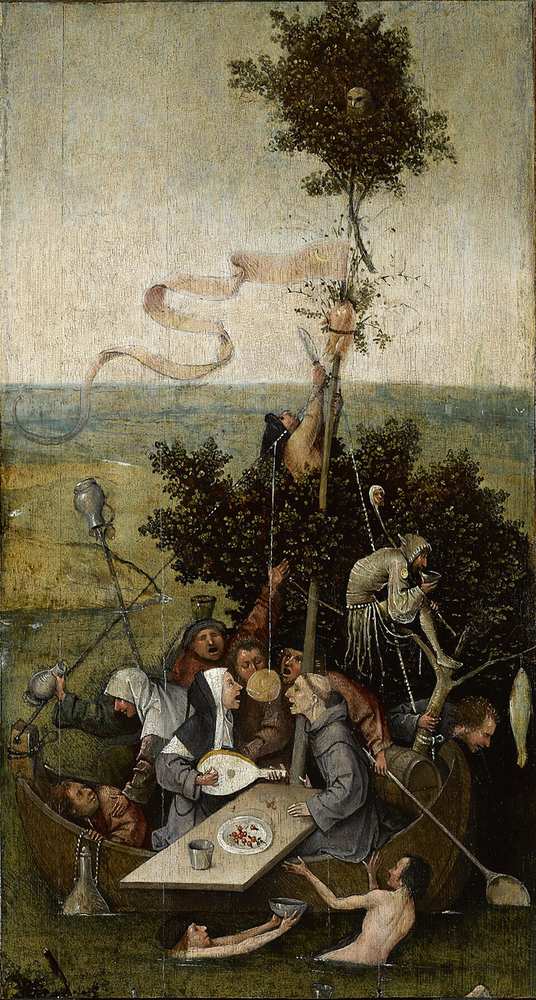 Musée du Louvre2 recorded worksLa Nef des fous
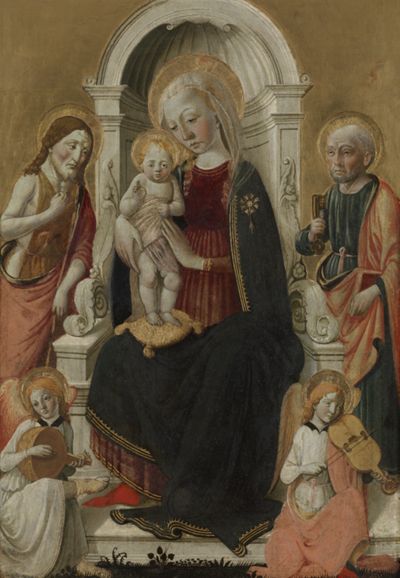 Museum of Fine Arts Ghent (MSK)2 recorded worksFrom the collection: Maria met Kind, de heiligen Johannes de Doper en Petrus en twee musicerende engelen
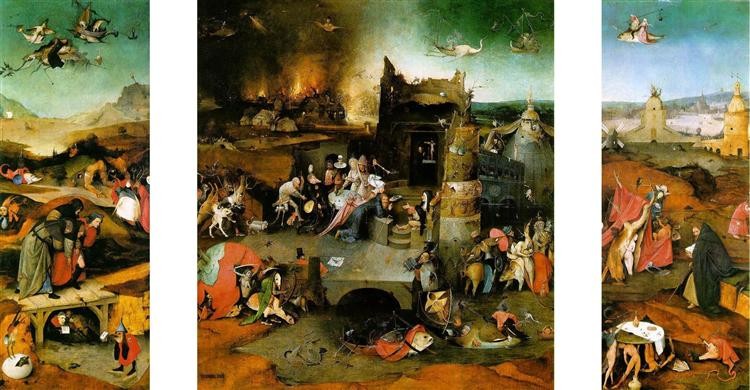 Museu Nacional de Arte Antiga2 recorded worksTriptych: The Temptation of St. Anthony
Sources 8
- Wikidata (CC0)
- Austrian museum collections: independent authority research
- National Gallery of Art
- Pantheon 2025 — Datawheel (CC BY-SA 4.0)
- raw.githubusercontent.com — painter lifetime review
- Pantheon 2025 — Datawheel (CC BY-SA 4.0)
- Pantheon 2025 — Datawheel (CC BY-SA 4.0)
- Louvre painter identity and WikiArt profile links
In Gombrich’s The Story of Art
- Paradise and Hell, The Haywain Triptych · c. 1510