 Art, literature & history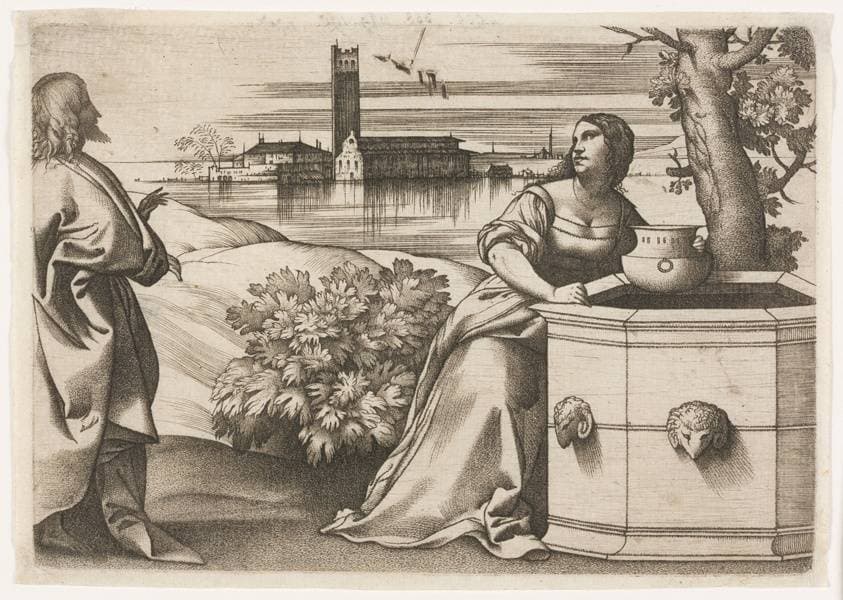
Christ and the Samaritan Woman
c. 1510
- Dating
- Approximate date range
- Held at
- Art Institute of Chicago
- Medium
- Engraving in black on ivory laid paper
- Dimensions
- Plate: 13.2 × 18.6 cm (5 1/4 × 7 3/8 in.); Sheet: 13.8 × 19.4 cm (5 7/16 × 7 11/16 in.)
- Collection no.
- 1945.219
- Attribution
- By the artist
- Image rights
- CC0 1.0License details
Giulio Campagnola. Christ and the Samaritan Woman. Giulio Campagnola; Art Institute of Chicago; Clarence Buckingham Collection. CC0 1.0 (https://creativecommons.org/publicdomain/zero/1.0/). Full-frame proportional resize and JPEG compression.
Collection: Art Institute of Chicago
About this artwork
Christ and the Samaritan Woman — Giulio Campagnola. c. 1510.
Medium: Engraving in black on ivory laid paper. Dimensions: Plate: 13.2 × 18.6 cm (5 1/4 × 7 3/8 in.); Sheet: 13.8 × 19.4 cm (5 7/16 × 7 11/16 in.).
Collection record: Art Institute of Chicago, Chicago. Museum connection according to this source; current display unverified.
Giulio Campagnola invented stipple engraving, a method of using the point of the burin (a tool with diamond-shaped steel shaft) to make numerous small flecks in the metal plate, creating gradated tones instead of the more common linework. This technique approximated painting’s subtle transitions from light to dark values. This print may be after a composition, now lost, by Giorgione or Titian, both of whom were from Venice where Campagnola worked. It illustrates a story from the Gospel of John when Christ meets a woman by a well and asks her for a drink of water before revealing to her that he is the Messiah.
Description: © Art Institute of Chicago, original record, CC BY 4.0. HTML formatting removed; wording retained. Other artwork metadata: CC0.
Source: official collection record. Metadata selected and normalized by Artline from the source export, accessed 10 September 2026; no museum endorsement. Reproduction rights are separate.
Location checked Sep 10, 2026. This does not indicate whether the work is on display.