 Art, literature & history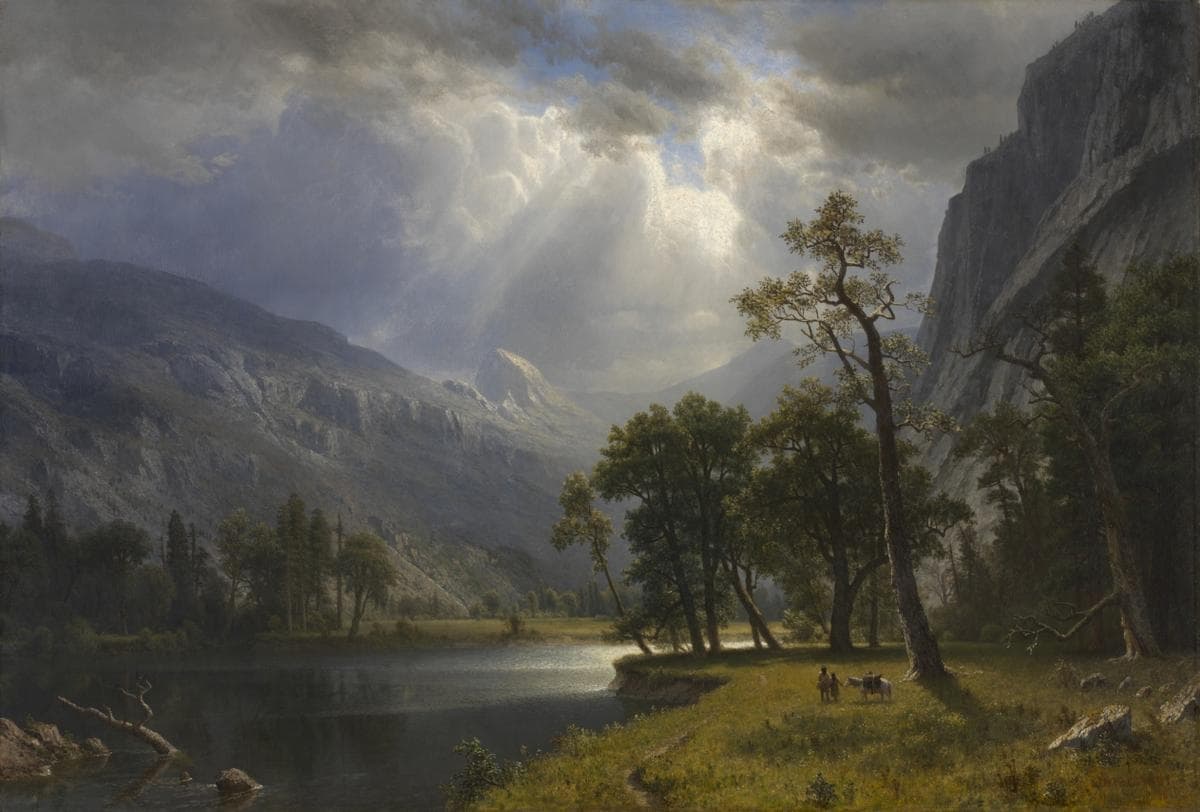
Mount Starr King, Yosemite
1866
- Dating
- Exact year
- Held at
- The Cleveland Museum of Art
- Medium
- oil on canvas on panel-back stretcher
- Dimensions
- Framed: 135.3 x 181 x 15.6 cm (53 1/4 x 71 1/4 x 6 1/8 in.); Unframed: 97 x 142.3 cm (38 3/16 x 56 in.)
- Collection no.
- 1922.684
- Attribution
- By the artist
- Image rights
- CC0 1.0License details
Albert Bierstadt. Mount Starr King, Yosemite. The Cleveland Museum of Art. CC0 1.0. Compressed full-frame reproduction.
Collection: The Cleveland Museum of Art
About this artwork
Mount Starr King, Yosemite — Albert Bierstadt. 1866.
Medium: oil on canvas on panel-back stretcher. Dimensions: Framed: 135.3 x 181 x 15.6 cm (53 1/4 x 71 1/4 x 6 1/8 in.); Unframed: 97 x 142.3 cm (38 3/16 x 56 in.).
Collection record: The Cleveland Museum of Art, Cleveland. Museum connection according to this source; current display unverified.
During the summer of 1863, Bierstadt visited Yosemite Valley in California and made numerous sketches. Back in his New York studio, he used them to produce many majestic paintings, including this view of the distant granite peak Mount Starr King. Such scenes thrilled East Coast audiences and helped encourage early movements to safeguard natural wonders. In 1864, President Lincoln signed a bill preserving Yosemite as public property; it became a national park in 1890. Bierstadt included two Native Americans with a packhorse in his composition, and their presence references the fact that Indigenous peoples had inhabited or seasonally visited the region for millennia. Over time, various government and military agencies dispossessed them of these ancestral lands. Although no longer residents in the national park, descendants of the seven Indigenous nations with ties to Yosemite persevered to live in neighboring areas.
Source: official collection record. Metadata selected and normalized by Artline from the source export, accessed 10 September 2026; no museum endorsement. Reproduction rights are separate.
Location checked Sep 10, 2026. This does not indicate whether the work is on display.